Showing posts with label The Lion King. Show all posts

Sunday, April 14, 2019

Rooney Gooding-Williams & Morton

While I understood the bulk of Gooding-William’s argument and do believe he made valid and strong points, some of his ideas I do not agree with. I found his analysis of the “Euro-centric picture of Africa” interesting, as well as the point that the depiction of the circle of life as “endless” might “reduc[e] Africa to the endless reproduction of a natural and pre-historic course of life”, devoid of cultural, political, social, etc development. However, The Lion King is about animals and not people. Morton’s point that “Africa thus becomes the repository for timeless values, although that does not mean that the place itself is without history” articulates that the writers employed the circle of life to impact social values (that are undoubtedly western) but it never broaches actual African history (or the history of the specific region that the Lion King takes place in because Africa is not a country nor does it have one ~history~).
I also didn’t totally agree with his analysis of Scar- primarily that “the future he envisions would not entail the persistence of a form of life that ‘has always been’, but the creation of a utopia that has not yet existed. Scar fails, because his will to create utopia creates dystopia”. I would not say that Scar ever aimed to create a Utopia, rather his own ideal dystopia. I don’t think he fails at this except that he destroys the ecosystem, though his goal was never to preserve the circle of life. Morton argues that “it does not strike me that Scar and the hyenas represent a victory of history over the timeless ‘circle of life’”- Scar’s rise to power is not the one historical event given to ~Africa~. The Circle of Life is instead used as a metaphor for “law, order, and enlightened hierarchy”, and Scar merely disrupts it momentarily.
Finally, I don’t agree that the writers of The Lion King were going for a metaphor for American Inner City. While there are absolutely elements of this, primarily with the Elephant Graveyard representing the inner city/slums/projects/poor part of town, and that element was likely intentional whether consciously or unconsciously, as a whole, I don’t see it. The Elephant Graveyard and the accepts/portrayal of the hyenas is problematic or racist or classist. Yes. But rather than an intentional and explicit commentary, this likely was a product of the unchecked biases of the creators as they tried to portray evil.

Saturday, April 13, 2019

Gooding-Williams vs. Morton


When it comes to the clashing arguments of Robert Gooding-Williams and John Morton about Disney’s The Lion King, there’s a clear winner. Gooding-Williams offers an oppositional reading of the movie that constructs a complicated political allegory in which the Pride Land is white, wealthy America and the elephant graveyard and its hyena inhabitants represent the inner city. His evidence coincidental at best, Gooding-Williams fails to convince me that “Disney’s film lets disappear from view the macropolitical and macroeconomic social relations which cut across the boundaries of urban spaces yet contribute substantially to the ongoing reproduction of urban poverty” (378). Responding directly to Gooding-Williams, Morton successfully highlights flaws in Gooding-Williams thinking and proves it to be no more than wishful thinking. 

Like many stories, The Lion King has a plot that relies on obviously marked outcasts to drive the conflict. Gooding-Williams claims that the hyenas, who are the outcasts in this instance, are emblematic of people living in America’s inner cities because of way in which Disney marks them as different. The two hyenas with lines in the movie are voiced by Whoopi Goldberg and Cheech Marin, and Gooding-Williams argues that their voices are used “to represent the speech of...hyena characters as black English and Latino slang” (377). He goes on to compare the hyenas’ living quarters to overcrowded housing developments common in inner cities. The way in which the hyenas are vilified by and isolated from the rest of the animals of the Pride Land, he argues, mirrors wealthy and middle class America’s attitude toward its inner cities. 

Image result for hyenas lion king be prepared


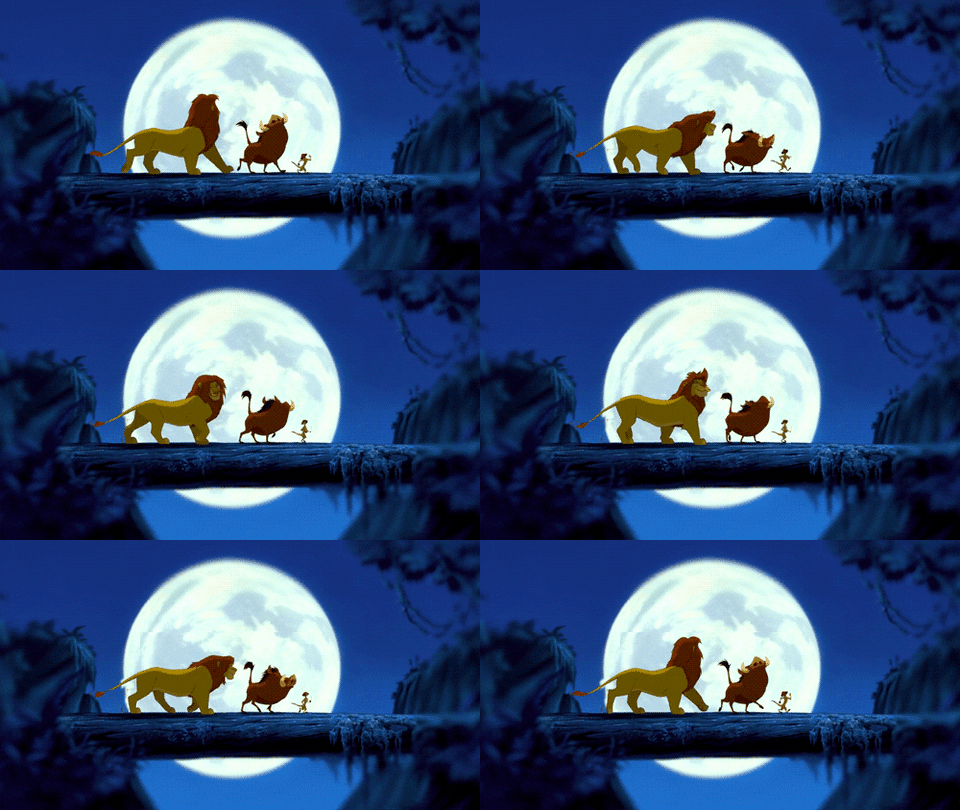
Morton, arguing that Gooding-Williams’ Marxist bias guides and misinforms his theory, responds to Gooding-Williams by focusing on The Lion King’s central conflict between good versus bad and how the inner city allegory doesn’t quite fit. Morton points out that the constant “series of oppositions between good and evil, between light and dark...and between legitimate work and theft” shape the story (314). It requires an obvious villain that fits the dark and evil side of these oppositions, and the hyenas are simply the ones chosen to do so. Morton continues, arguing that Simba’s friendship with Timon and Pumbaa contradicts Gooding-Williams reading of the movie. Like the hyenas, they fall at the bottom of the food chain and are social outcasts. Morton suggests that “through the ‘brotherhood’ struck up by Simba, Timon and Pumbaa, The Lion King strikes an alliance between the productive working class and the legitimate ruling class” (315). This friendship counters the idea that Disney seeks to vilify the lower classes and encourage their isolation. 
Related image


The Lion King definitely has some problems regarding race, but at the end of the day, Gooding-Williams is too far-fetched in calling it a political allegory for American inner cities. 

Elizabeth Reneau, Gooding-Williams vs. Morton Response


My interpretation of the Lion King is that it was a magical film, one filled with characters who save the day and the inescapable Disney love. However; every child, every parent, every research analyst, and every academic will have their own interpretations of films. I am going to piece together two interpretations of The Lion King film. One interpretation is that of Robert-Gooding Williams who had some pretty radical beliefs in regards to the secondary discourses of this film. The second interpretation is John Morton’s argument which goes through what the Lion King film truly portrays. After reading and analyzing both of these interpretations, I would have to be bold enough to say that John Morton’s argument not only made the most practical sense, but it also was not as far-fetched as that of the Gooding-Williams argument. I am going to go through each argument and point out the foundational principles of each, but also the points that I like and disliked along the way.
Gooding-Williams built his argument mostly off of his acquaintance, Hegel. Hegel and Gooding-Williams believed Disney depicted Africa as a “geographically bounded and culture less place of spatial infancy that has not once evolved a novel and non-infantile mode of spiritual existence.” The belief that Africa was lacking history, was culture less, and embodied a dark land had been believed by Gooding-Williams after watching how Disney depicted Africa in the making of the Lion King film. Through characters such as Scar, Africa apparently had spiritual loss and decline. The “Circle of Life” also led to the decline of Africa, rather than the growth and advancement according to Gooding-Williams argument. Now, what do I believe about this part of his argument? I do not agree. I found that he misinterpreted the “Circle of Life.” In my opinion the “Circle of Life,” demonstrated by Disney, brings a sense of connectedness… not a spiritual loss or a lack of history. Another portion of Gooding-Williams argument was the representation of the American inner-city through the hyenas in the land beyond the sun in the Lion King. Due to the African American voices for the hyenas, GW analyzed this as inequality towards different races (African Americans and Latinos). I can follow more of his argument in regards to the hyenas being unequal to the lions and linking that back to racial inequality in America due to the actors which played the parts of the hyenas (African American and Latino actors/actresses).


Morton’s argument spends some time explaining the issues with that of Gooding-Williams and also addresses Disney’s role with racial issues when making this film. Morton explains the misinterpretation of Gooding-Williams argument in regards to the “Circle of Life.” His tone also towards Disney is not as accusatory as Gooding-Williams which I personally love. Morton does not blame Disney, rather he keeps them accountable for their portrayal of race relations.  I agree more with Morton’s interpretation of the Lion King because it brings in realistic evidence and a more intellectually sound argument. Also, Morton is not here to paint Disney as monsters, rather he points out the things Disney did right and what they did wrong. I believe looking at the right and the wrong of different essays truly embodies a well-developed argument.

Friday, April 12, 2019

Katherine Tang, Gooding-Williams vs Morton Response

Image result for The lion king
Source: URL

The Lion King might’ve been a huge success, but it did not escape criticism. Robert Gooding-Williams outlines the issues with Disney’s film, and, in response, John Walton discusses his own thoughts on Gooding-Williams’s analyses with his own interpretations. Although neither of the arguments were "wrong" or completely flawed, I found John Morton’s more well-rounded and convincing. 

In his article, Gooding-Williams argues that Disney’s portrayal of Africa reflects Hegel’s depiction of Africa. As Gooding-Williams describes it, Africa appears to Hegel as "a geographically bounded and culture less place of spiritual infancy that has not once evolved a novel and non-infantile mode of spiritual existence.” Gooding-Williams argues that this is similar to The Lion King’s portrayal of Africa that “reduces Africa to the endless reproduction of a natural and pre-historic course of life.” I can follow this point of view. Indeed, Africa is quite often popularly seen as stuck in this natural state of living. Of course, making a film about animals set in Africa singing about the Circle of Life doesn’t do much to alter this Eurocentric view. 

I can also follow the rest of his argument of how Disney claims that transformations and “becoming historical” will cause “spiritual loss and decline.” At this point, I couldn’t really see what his purpose of emphasizing this information was for, and I would say that this weakened his overall argument (you could say that it was implied within, but his roundabout language was also hard to follow). He later ties the importance of this to Disney’s America, claiming that The Lion King is actually an allegory for America, specifically with the elephant graveyard as the American inner city and the hyenas living there as the blacks and Latinos that populate the inner city. According to Gooding-Williams, Disney’s film shows, through the changes of Pride Rock under different leaderships, “the perfect polity American would be if its circle of life excluded its underclass of black and Latino scavengers.” Drawing conclusions to his argument, Gooding-Williams ties in what exactly this means in terms of American society, demonstrating that reason for urban poverty is not exclusively due to those who live impoverished lives, but rather due to “macropolitical and macroeconomic social relations” that are ignored. Essentially, what I picked up from this was: America’s capitalistic policies are driving the country to the ground and are the driving force for urban poverty. 

I might not necessarily agree with accusations of Gooding-Williams towards Disney, but I could generally follow his reasoning (other than some wordy and strange language that I had trouble deciphering) and how he drew the conclusions he made. However, his overall argument felt quite unsatisfying. Beyond just how fluttery some of the language was (including but not limited to “macropolitical and macroeconomic social relations”, like, what exactly are you trying to say?), I found his argument quite one-dimensional. He doesn’t include any conflicting points of views, such as from other authors that might have interpreted the film differently, and this would’ve helped with building his argument and making it more well-rounded. In addition, he responds limitedly to the overall events in the entire film specifically, instead picking and choosing aspects to fit his point of view. His argument drew a lot on outside people and concepts that could be applied and molded into his conclusions, and I think some of the deductions he made were fairly huge leaps without more evidence from the film. These factors hurt his argument.  

On the other hand, John Morton’s response to Gooding-Williams’s article acknowledges that Gooding-Williams’s article is “broadly convincing,” yet Morton disagreed with Gooding-Williams's interpretations that he insisted were “evidently Marxist.” This form of agreement with disagreement I believe strengthens his argument in demonstrating his ability to think critically and not blindly disagree or agree. In another example, Gooding-Williams's argument includes claiming that Disney's Africa is portrayed as timeless, and Morton also argues with analysis a similar idea that "Africa... becomes the repository for timeless values," but specifically by maintaining capitalistic social values and ideologies and by demonstrating continuity through the beginning scenes and the ending. At the same time, Morton disagrees with Gooding-Williams that Disney’s Africa was a place without history, where he claims Africa is portrayed as “the site of history and ongoing struggle.” The agreement with disagreement thing works well.
Image result for mufasa and simba
Image result for simba with kid
Timelessness in the Circle of Life
Top: Mufasa and Simba URL
Bottom: Simba and Cub URL
In addition, Morton points out the shortcomings of Gooding-Williams’s argument regarding social inequality by exposing how Gooding-Williams makes most of his analysis through the hyenas, ignoring the other characters, such as Timon and Pumbaa. This was something that I was in agreement with. Morton instead argues that the comparisons between the different ostracized groups and the contrast between Mufasa and Scar expose the conflicts between good and evil that manifests itself through society whether it’s in the privileged or the impoverished. The logic and evidence that led to this argument generally made sense to me and was not difficult to follow. Ultimately, Morton points out the close-mindedness of Gooding-Williams, claiming that the film was “less black and white than Gooding-Williams recognizes.” I found that Morton did get slightly accusatory in some parts, including describing Gooding-Williams as “a malcontent driven exclusively by resentment and unwilling to reform his malevolence on the assumption of power,” and I felt that this hurt my opinion of him. However, I was thankful that Morton did not go in depth on the parts of Gooding-Williams's argument specifically commentating on America, as Gooding-Williams was actually educated in the U.S. and Morton was educated in England and lives in Australia. Since Morton may not have had the background to discuss these points, this omission (although not necessarily much) helps develop his credibility in my mind.

In general, I found that the way Morton expanded on Gooding-Williams’s argument and described his criticisms allowed for his article to be more informed and insightful. Consequently, Morton's analysis felt more convincing. 

Thursday, April 11, 2019

Simran Bansal, Gooding-Williams vs. Morton Response

The depictions of history and class relations in Disney’s The Lion King have been analyzed through multiple lenses by scholars such as Robert Gooding-Williams and John Morton. I don’t necessarily think that one argument was inherently wrong per se because it is in our nature as viewers to subjectively interpret texts according to our own values and beliefs. However, Morton’s argument definitely convinced me more. I will begin by analyzing Robert Gooding-Williams’ analysis in his article, “Disney in Africa and the Inner City: On Race and Space in The Lion King,” since it was published first.

First, Gooding-Williams stresses that Disney largely borrows from the Eurocentric ideology of G.W.F. Hegel, devaluing the richness of the African continent by reducing it “to the endless reproduction of a natural and pre-historic course of life.” According to William-Goodings, the “circle-of-life” theme is actually belittling to the African continent, for it implies that no progress or cultural advancement is made in that primitive “other” part of the world. However, I don’t buy this. I honestly don’t think Disney was intentionally trying to imply that there was no room for improvement and maturation to occur in Africa’s future. Instead, to me, the circle-of-life theme was an uplifting message that we need to accept highs and lows as natural components of life. In addition, the “circle of life” as described in the movie was mainly referring to the literal depiction of all life forms on nature as interconnected and united in the end. For example, Mufasa explains to Simba that from the smallest ant to the most ferocious lion, all animals are more alike than they are different—despite the grand diversity that exists, all organisms are simply trying to make their way in this world and thus should exist in a beautiful harmony.

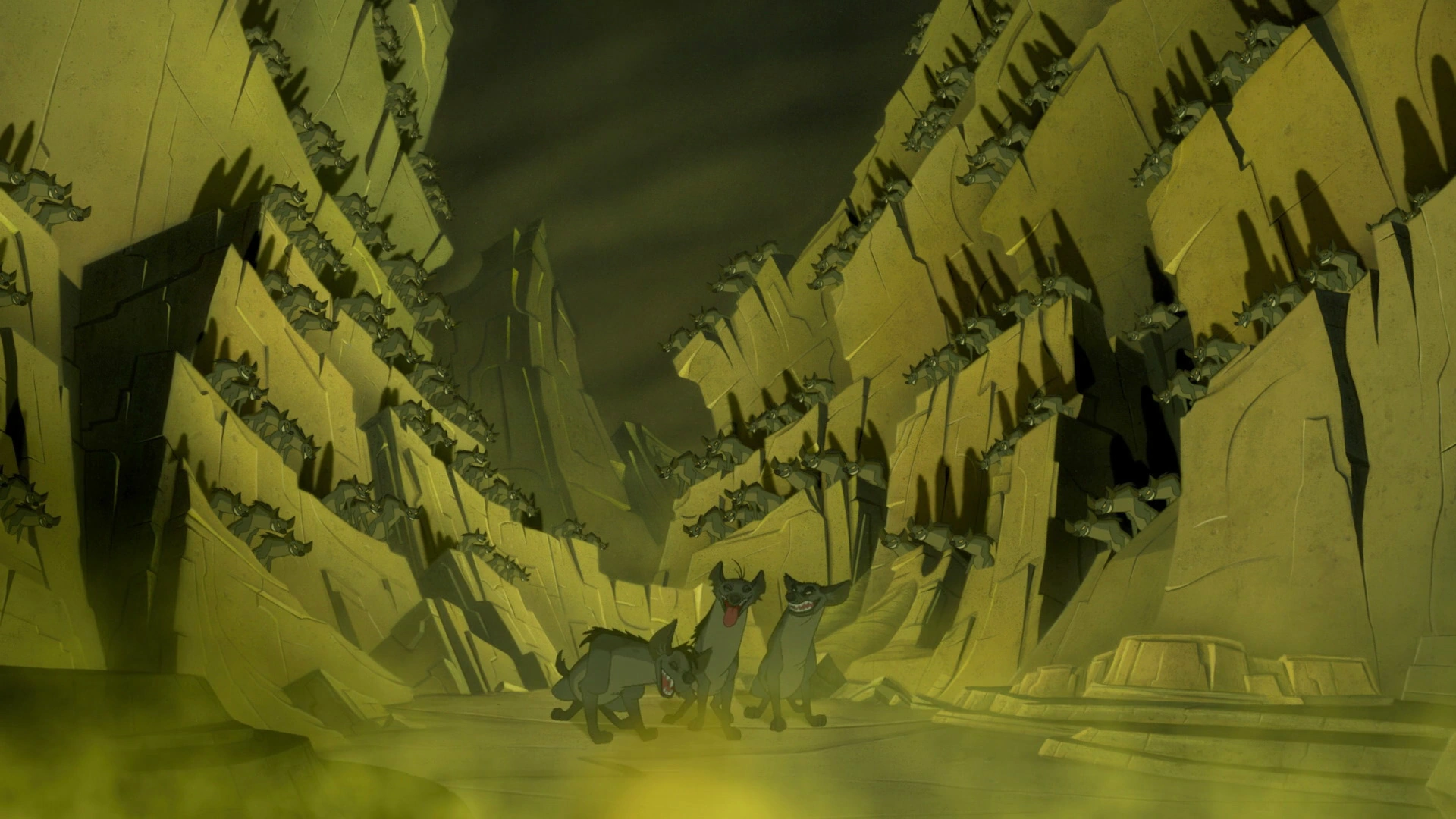
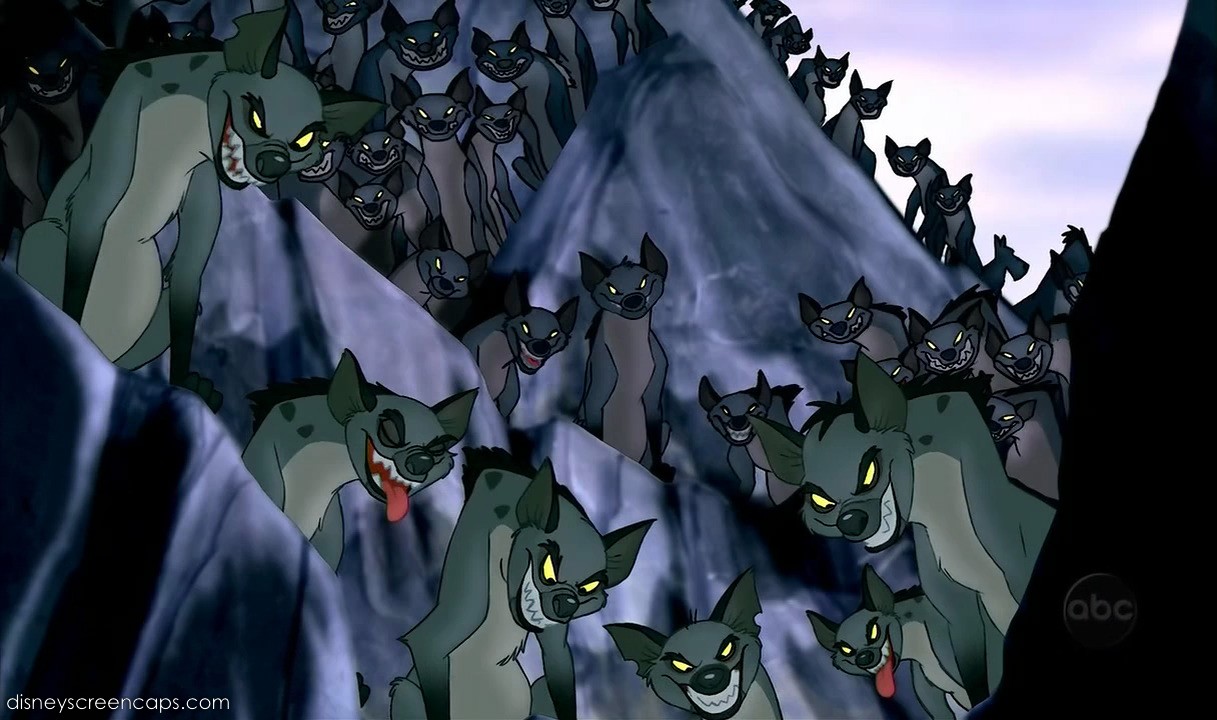
Moreover, William-Goodings argues that although the film takes place in Africa, Disney really transforms Africa into “an allegory of American political life that denies that inner city blacks and Latinos have a rightful place in the American polity.” For his evidence, he cites that the hyenas that live in the Elephant Graveyard outside of the Pride Rock boundaries are analogous to discriminated minorities living in America’s inner cities because Whoopi Goldberg and Cheech Marin, who voiced two of the three main hyenas, were chosen to exude African American and Latino slang respectively. But, in his argument, Gooding-Williams overlooks one key piece of information: many main characters were voiced by minority ethnicities, not just the hyenas. Many of the “good” characters such as Mufasa, Nala, Rafiki, and Sarabi were voiced by African Americans too, so according to Gooding-Williams argument, Pride Rock should then also be considered a manifestation of America’s inner cities. In addition, Gooding-Williams points to the scene where the hyenas are lined up before Scar, claiming the backdrop is the “unambiguous image of a housing development in the projects.” However, as one can see from the image below, the backdrop simply looks like a tall grey structure—can’t that also represent a skyscraper, an ingenious engineering feat?

Finally, my last major problem with Gooding-Williams’ argument was his characterization of Rafiki. He explains that while the hyenas represent angry, assertive Blacks who seek political enfranchisement, Rafiki represents a distinct type of African American who does not fight for the rights of his people, but instead subserviently follows the will of the White folk. As Morton effectively points out, there is nothing that connects Rafiki to the hyenas, nor any convincing evidence that Rafiki is meant to represent an outsider too. In fact, as Morton argues, Timon and Pumbaa are more connected to the hyenas than Rafiki, for they are at the bottom of the food chain, consuming only “lowly grubs and beetles.” Thus, I do not think that Rafiki (a valued and trusted ally of Mufasa, the king of Pride Rock) should be characterized as an outsider who has abandoned his own kind, for there is little to suggest that he does not belong to the kingdom of the light.

Furthermore, what I really appreciated with Morton’s piece, “Simba’s Revolution: Revisiting History and Class in The Lion King,” was that Morton did not merely disagree with everything Gooding-Williams had to say, but he stated that while what Gooding-Williams stated could be a possibility, the film should be interpreted with a broader mindset. I agree that the film is “less black and white than Gooding-Williams recognises” because Scar is not the only revolutionary looking to ignite change, nor is corruption “restricted to a particular region.” While Scar does aim to create change by altering the “circle of life,” Simba aims to create change by altering the “circle of death” created by his Uncle. In addition, Simba’s unexpected brotherhood with Timon and Pumbaa, two creatures who are at the bottom of the hierarchy, shows that meaningful relationships can transcend physical boundaries and social class, thus blurring the separation between Pride Rock and the outside lands. In essence, Morton’s argument is more effective, for he shows that Gooding-Williams is too narrow-minded and simplistic in his analysis.

Wednesday, April 10, 2019

Chris Theodore, Gooding-Williams vs. Morton Response


Time to delve into the debate between Gooding-Williams and Morton...


Alright. So we have two arguments here. Introduce Exhibit A) Robert Gooding-Williams' (I am going to call him GW for short) piece "Disney in Africa and The Inner City: On Race and Space in The Lion King". In this piece, Williams argument... well although he had to throw many big words in it to get there... comes down to this for me. GW argues that in The Lion King, Disney has created an "Africa" that is "an allegory for the U.S" in which it focuses on the "inner-city of disenfranchised black & Latino residents... [and is] empowered by [Scar] giving them political power they have lacked." He pretty much also says that this Disney created view creates a negative and very Eurocentric view of urban poverty. GW also relies heavily on his homeboy, G.W.F Hegel . He uses Hegel to advance the notion that Disney's The Lion King supports this idea that Africa is "cultureless", "the land of childhood" , and "historyless". I would also go to say that GW doesn't buy this "Circle of Life" thing. Again, with his best bud Hegel, he says that "The Lion King re-cycles and re-values Hegel's Euro-centric picture of Africa". He pretty much thinks that the song reduces Africa and is just recycling and reproducing Eurocentric views. 

GW doesn't stop there as he shifts his focus of his essay to analyze how Disney segregates the spaces within the film to support a racist agenda. By utilizing the desolate, death-land of the "Elephant Graveyard" as the home of the hyenas who use the "black English and Latino Slang" due to two main hyenas being voiced by Whoopi Goldberg and Cheech Marin. He then analyzes a scene with Scar and the hyenas to say that "it depicts the building in which the hyenas live as a bleak-looking and overcrowded hi-rise, the unambiguous image of a housing development in the projects." 

Okay, so that gives a good summary of what Exhibit A is. Makes an arugment... but as you will see, I don't buy it.


GW got the conversation started...but for me... Morton hits it home.


Introduce Exhibit B) John Morton's essay "Simba's Revolution: Revisiting History and Class in The Lion King" focuses its argument solely around a response to GW's argument. I agree with how Morton puts it... GW's basic argument is "broadly convincing". Yes sure, I agree that Disney maybe hasn't been the best with creating media/entertainment that is counter to the single story depictions of Africa. But seriously. I would like to believe in the better qualities of humans to say that no one would go out of their way (during this time period) to create a racially divided film. Where GW sees the "The Circle of Life" to be recycling history and race with the example of the hyenas... but I mean... there is more to the film than just that. Morton highlights that GW "says nothing about the character of Mufasa, his kingdom, and his subjects as an allegorical representation of legitimate order". This helps Morton's argument in my opinion as he calls out GW's tunnel-visioned evidence. Morton is able to call out this flaw and to then further his argument by suggesting "that what is at stake in the depiction of Africa as a zone of apparent timelessness is the desire to maintain the standards and ideology which legitimate contemporary capitalist forms of social reproduction." Talk about a clap back. I also loved how Morton viewed GW's idea of "splitting" as more of "oppositions" of good and bad. Instead of making a stretch of a claim, Morton simply states that some characters were good, some evil, some places light, some places dark, and it is within these oppositions that a character, Simba, gets to discover who he is. Isn't that how life kind of goes for us humans? I believe so. 

I don't know if I align with Morton's argument more because he doesn't rely on some German philosopher and idealist and then says a ton of fancy words in a sentence and loses me. But actually, I think Morton's argument is much more effective than GW's because his evidence is complex, yet his translation is simple. He makes it clear why these facts matter and how this actually comes to represent Africa history, but also the analysis of U.S class and space. In addition, GW's evidence can fall through very hard for him when he has this tunneled view. Did he know that almost all the top food-chain members were voiced by African American men and women? To me, how can you argue something without acknowledging where your evidence or analysis may become flawed (I guess thanks GW for a quick lesson before my final paper/project!). Overall, Morton makes the strongest, most effective, and convincing argument. He doesn't make it "his way or the high way", but rather enters the conversation of GW, analyzes his argument and its potential flaws, and then makes his own claim out of it. And in doing that, does a job well done.

Also, talk about a savage ending by Morton. 

GW ending: "In effect Disney contributes to what, in the spirit of Marx, one could call the mystery of the fetishism of urban poverty."

Morton ending: "In effect Gooding-Williams, by favouring Scar outright, contributes to what, in the spirit of George Orwell (1951), one might call the mystery of the fetishism of proletarian revolt."


Sunday, April 7, 2019

Rylee Bowen: The Lion King Response


Image result for scar gifFirst things first. We need to talk about Scar. Easily one of the top villains Disney has created...right? (Ranked number 3 after Maleficent and the man who killed Bambi's mom) While Scar committed some truly terrible crimes, he had a pretty dark past. Mufasa and Zazu joke about him being a rug and them beating it. And its clear looking between the two brothers that Mufasa was raised in a different manner. Despite all of this, he had some pretty moralistic goals. Because Scar was an outcast, he grew up with the hyenas as his only friends. He saw how Mufasa's rule lead to food for the lions and other top predators, but left the hyenas starving. As King, he focused on getting food for the underdogs under his brother's rule, but clearly, his plan did not work because everyone starved. But even with those points, Scar killed his brother, attempted to kill his nephew, and sang about these plotted murders in a very Hitler inspired number. He clearly should value family more, but he does seem to care about Pride Rock.


Image result for the lion king gif mufasaI didn't realize how close Simba and Mufasa were before his death. The scene with Mufasa "teaching his son a lesson" ended with them laughing and play fighting. Mufasa seems that the perfect father figure. He teaches valuable lessons, while loving his family and protecting them from any harm. This most be why his death is one of the cruelest Disney has thought up.  Additionally, Simba completely blams himself over the death of his father. I'd be interested to know how long Simba spent in exile. He seems to age really quickly while Timon and  Pumbaa don't change at all.

Many people claim this story is identical to Hamlet. They both have murderous uncles and revolve around personal growth. I completely believe this! The story lines are basically the same. On a different note, this film was stunning. The animation and colors are so beautiful. I loved how everytime the lions would lay down, leaves and dust would blow out. There was so much attention thrown into the details of the animation. Additionally, the music and songs in this were incredible. Disney incorporated many African instruments and styles into these songs. I found Hakuna Matata to be annoying though. Its very unrealistic to just forget about your problems and move on. It has no growth, and the funny thing is I see this mantra everywhere. Disney clearly has power and reached a huge audience with this piece. Have worries! Learn from them! Its ok to be scared.


Samuel Joseph Disney's The Lion King


I haven’t watched Lion King in a really long time, but I remembered all the songs, especially Hakuna Matata, which was probably my favorite part. I was watching the film when one of our family friends came over, and they have a four-year-old daughter who hadn’t watched Lion King before, so she watched part of it with me. It was the scene when Mufasa went to confront Scar, and she pointed at Scar and then Mufasa and said “that’s the bad lion and that’s the good lion right?” and I was like “Yeah, woah” and I totally didn’t know how to respond. Makes sense, however, because Scar is depicted with the long face and sort of moustache figure like Jafar, and he was dark and had that deep voice as well. That got me thinking... Is Scar really the bad guy? Is it his fault that lion government runs on a patriarchal system where the biggest and strongest lion gets to be king, and not the smartest? Is it his fault that if the king has a son that he's all of a sudden surpassed to next in line for the throne? Scar is super cunning and deceitful, but he's really, really good at it. 


The opening scene of the Lion King was jaw-droppingly amazing. The story behind how this was Disney’s first time using an actual movie clip as a trailer was really interesting, but that clip would have definitely gotten me to watch the movie; just the choice of music and animal animations were spectacular. It’s surprising to think that this movie was assigned to the “B” team, and just how well this production turned out to be. While many regard this as the first “original” Disney film, not be based off another story, I see a few striking parallels between this story and Sundiata: The Lion King of Mali. Sundiata is very clearly Simba, in the fact that they are the children that are destined for the throne, and they are the ones that get driven out of their home land to a foreign area, only to return to their home land one day, save the people there, and become king. It is also possible to relate Sundiata gaining his strength once he was away to Simba growing up and gaining his lion roar because both Scar and Sassouma made fun of the children’s weaknesses, only for those children to grow older, gain strength, and come back to defeat them.


The movie in general was a warm, comfortable atmosphere. With the exception of the scenes where Mufasa died and where the hyenas were in their cave, the movie was absolutely wonderful to watch (which totally reminds me of the dog that was crying when Mufasa died SO SAD :,((( ). I enjoyed the emphasis on the strength of family in the film; Mufasa and Simba were very close, but I see more of a familial connection with Simba, Pumba, and Timone. This serves as grounds to emphasize the fact that family doesn’t always mean blood, it’s the people who would do anything to see you smile.


I’m not sure if I’m the only one here, but I felt really encouraged and empowered after the Simba and Rafiki scene. I’m not sure exactly what it was, but just the way it all unraveled, I guess. Rafiki tells us that everyone has a past and sometimes it’s good, but sometimes it’s bad, and we have two choices – we can either run from it, or learn from it, which made me think about all the things that’s happened to me, and how I should constantly be learning from my mistakes in order to become a better person.

In all, top ten movies of all time.

Rose #Shelfie