
Before I start, I just want to make clear
that my argument may be slightly biased, and to take these words with a grain
of salt. I had a lot of problems with Gooding-Williams’ understanding of The
Lion King, and it was very difficult to extract my personal bias from my
interpretation of his argument in comparison to that of Morton. While both arguments
have flaws, my bias persuades me to join Morton’s side as the better argument
overall, although at some points, I believe that Gooding-Williams has even more
compelling arguments.

To begin with Gooding-Williams’ argument,
I believe he himself presents an argument filled with preexisting internal
bias. What started out as a political interpretation of the Lion King developed
into an extremely racist and radical view of something that potentially no one
would have seen before. All the ‘positive’ things that Gooding-Williams did to
bolster his argument, due to my bias, made me count off for his argument. In
the beginning, he addresses the naysayers, which is a ‘positive’ effort to
start your argument. From TSIS, addressing the naysayers actually serves to
bolster your argument and add ethos instead of bringing down your credibility
(it also shows that you are not single-minded and open to other arguments). While
he mentions opponents will argue that these films are made for entertainment, he
refutes this by saying that thinking from this perspective casts out your
ability to see the undertones in the film. While I do agree with this, the way
that Gooding-Williams goes about arguing this makes me want to disagree with
him. He presents his argument as the only way that is correct with extremely
radical thought. So in fact, in my opinion, his addressing the naysayers actually
lowers his argument.
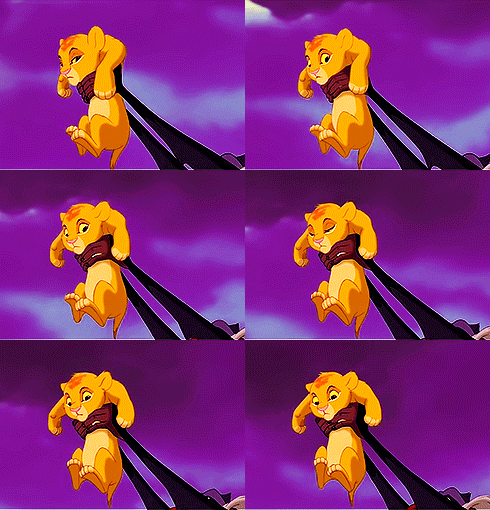
He does bring in outside sources and direct quotes in
Hegel. While this should serve to add ethos to his piece, the outright racist and
non-progressive nature of Hegel’s argument causes me to dislike the argument as
a whole. The fact that Hegel claims that Africa has no historical part of the
World is plain wrong; Hegel comes across extremely entitled here, and the fact
that Gooding-Williams supports this makes him seem this way as well. I start to
agree with Gooding-Williams’ argument when he mentions the facts about how Whoopi
Goldberg and Cheech Marin are used to represent the hyenas as black and latino,
and thus the hyena bunch as the ghetto. This argument completely makes sense to
me, and I can’t refute it in any way. He then goes on to make the argument that
Disney is showing that if we empower the black and latino citizens of America,
that the country will go into chaos just as shown in the film, which I
completely disagree with, and this shows his entitled mindset again. I didn’t
enjoy the conclusion where he brought in new information with the Smith quote,
which first of all I didn’t understand; second, I didn’t understand his
explanation of the quote; and third, I didn’t see how it fit with his argument,
which led me to believe that he confused himself and his readers at this point.
Basically what I’m trying to get at here is that while Gooding-Williams has
some amazing and revolutionary ideas, these are much too racist and radical to
actually grant any credibility to. Therefore, I do not agree, nor will I want
to agree with his argument.
Another argument that details the racism of the Lion King can be seen here, where it is mentioned that it is, in fact, Mufasa that is the racist character in the Lion King. Nick mentions that viewers do not know why Hyenas are exiled to the elephant graveyard, which is acceptable, and that we must question the background to these motives before diving into the movie itself.

Morton, on the other hand, while refuting
Gooding-Williams’ argument, does not include radical thought into his argument,
rather a sound, logical arrangement of his thought. Before I even read his
piece, I found myself on his side because any refuting of the Gooding-Williams’
piece would serve justice to the absolutely wretched thought process in the
first piece. At first, the argument starts strong with a solid summary of the
Gooding-Williams piece, and why it’s radical and wrong. Morton does a wonderful
job of providing quotes and examples from the Gooding-Williams piece, and then
goes on to explain why these thoughts are wrong, and provide new examples of
thought for why his thoughts are correct. For this, I applaud Morton. However,
as his argument progresses, I don’t necessarily see this as a full refutation
of the Gooding-Williams piece, however, while the first half does so, the
second half seems to be a completely new argument, which is not wrong in any
way, but not what I was expecting. Another thing I noticed, is that in the
second half, Morton got caught in a plot summary of The Lion King rather than providing
us with solid and sound thought of his argument, which I was a little upset
about. He, however, ends strong by again refuting Gooding-Williams’ argument as
wrong and radical. While Gooding-Williams provides readers with an argument
that at some points has merit, he includes overly racist and Marxist thought
into his writing which causes the credibility of his argument to drop (in my
opinion). Because Morton doesn’t do so, and his views align with my own hatred for
the former piece, I am drawn to agree with his argument. Although there is too
much of a plot summary in the second half of the piece, the first half does a
wonderful job of refuting the Gooding-Williams argument. I would have hoped for
more refutation of the former argument rather than a completely new argument in
the Morton piece.


