Showing posts with label Sundiata. Show all posts

Tuesday, April 2, 2019

Rylee Bowen, Sundiata: Lion King of Mali


Image result for hero's journey memes
There's something about opening a picture book and feeling the nostalgia of my childhood coming back. Though this story is short it tells a powerful historical event. The tale of Sundiata and his quest to rule Mali covers all of the essential points to telling a good story. We can see this in the form of the Hero's Journey. For example, Sundiata's supernatural aid comes with his birth. As the King's griot predicted, "the son of the lion and the buffalo will be mighty indeed!" Spoil Alert: He was right.

Image result for sundiata vs lion king
Disney is notorious for remaking fairy tales and spinning them into to happy stories, but they claim their Lion King is completely their own. Clearly, this sparked outrage and fans point to a multitude of stores as the origin. Sundiata defintely is included in this debate. Their story lines are very similar, but this might be because they both follow the Hero's Journey so closely. And while it may seem eriely similar to Sundiata's tale due to the lions, Disney has plenty of movies that involve animals with human-like characteristics.

Image result for bullying gif
When Sundiata was a boy, he was teases and ignored for his inability to walk and talk. They laughed because they didn't understand how this kid was fortold to be a king when he couldn't do the bare minimum to survive. His father's first wife rejoiced in this because her son was the heir. A major difference in this story however, is her son isn't the villain. While Sassouma Berete, the wife, did essentially hire some witches to kill Sundiata, the son did nothing in this. (Also, killing someone over borrowing some spices is a tad extreme.) His mother choose for him to be king, and Sundiata and his mother fled to protect themselves and let Sundiata grow up. The villain in this story is Sumanguru, a greedy, sorcerer king that ruled over Sosso. He decides to take over Mali, and thats when Sundiata sought help to defend his childhood home. Thankfully, Sundiata's closest friend, Balla Fasseke, taught him the sorcerer's weakness, the spur of a white roster.


Related image
Love is a real emotion in this story. Sunidata's father fell in love with his mother and the bromance  between Sundiata and his griot was genuine. Something I found quite refreshing though, was the absence of romance for Sundiata. His story revolves around his brave actions. His rewarding by becoming a king as opposed to winning a beautiful wife. The characters have personalities and goals.(Sorry Nala. You'll get some love next week) Sundiata fought for purely unselfish motives.

Rooney Wisniewski's Sundiata Response

I found this story delightful in a way that only children’s books are. It was fast-paced, it didn’t dwell on details, it was colorful and easy to understand, there was a clear message, and there was no grey area between good and evil. Sundiata is honourable and pure throughout the entire story, making it clear at the end that he is both the answer to his kingdom’s strife and a perfect king. He never gives up, he allows all to exist in their ~rightful place~, he never displays negative emotion, et cetera.
The griot plays an incredibly important role in this tale, as does Rafiki in Disney’s version. Balla Fasseke is Sundiata’s advocate and friend, encouraging him and speaking on his behalf to the people. Sundiata would not be remotely successful without him- the very first words Sundiata has the ability to speak are “Balla, you are my griot”. The emotional connection between the two is apparant, as Sundiatanever forgets Balla Fasseke and thinks of him often during his period of exile.
I was a little confused by some of the plot developments because they happen extremely quickly- Sumanguru is introduced out of the blue, the long period of exile lasts three paragraphs, and the details of the intense battle read a little like a list. It definitely wasn’t a super exciting wording for a battle scene, leaving the happy ending a little unsatisfying and abrupt. Perhaps I am simply used to the overwhelming action of Marvel movies and not that in orally passed down folk tales, but I was looking for more details!!
Character parallels were more evident the more I considered it. At first read, the story seemed wildly different from Disney’s version, but the general plot line is actually pretty similar. Scar assumed all of the villain roles in one: the council of elders who do not allow Sundiata to ascend to the throne, Sassouma Berete’s fear of Sundiata’s strength, and of course, Samanguru, the sorcerer king. Rafiki takes the place of both griots, and I guess Timone and Pumba are the king of Mema? Perhaps.


How kingly. Though at the end of the Lion King, they do find their own empire…
I love Timone and Pumbaa

One thing I found interesting is that Disney absolutely removed the polygamy/ presentation of Sologon Kedjou and her and the King’s marriage from the movie. This makes sense because that storyline doesn’t fit with western values/ norms of marriage, but they didn’t even try to adapt it they just cut it. Also, there isn’t a narrator - or griot - who speaks directly to the audience in the movie, whereas the beginning of Sundiata definitely feels like someone is talking to you, reminiscent of the oral history of the tale.

Katherine Tang, Sundiata: Lion King of Mali Response


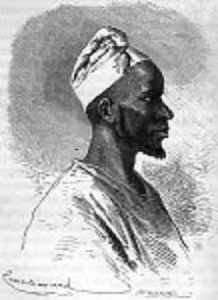
While reading Sundiata: Lion King of Mali by David Wisniewski, I couldn’t help but wonder how much of it was based on historical fact and how much of it was exaggerated through the spreading of the story. I included a picture of Sundiata Keita below, who the story was based off of. As silly as it is of me to say this, while the story had an encouraging message, I couldn't let go of just how cliché the storyline was (unsurprisingly). I'm likely comparing it with the other source texts we've read, with their more grotesque and odd scenes. In this sense, the simplicity of the story was refreshing and very predictable (and also more suitable for younger readers).
Image result for sundiata keita
Sundiata Keita
 Source: URL
There were certain scenes in the story that reminded me closely of Black Panther, to the point where the movie clips were setting up the scene for Sundiata’s story in my mind. This includes the part when Sundiata and his mother run away, reminiscent of the scene in the movie where T’Challa and his family flee due to the threat of the new king. The strengthening that Sundiata went through over time and even the help he received from neighboring kings reflected similar events in Black Panther. The fact that Sundiata’s story, The Lion King, and Black Panther all take place in Africa and are so mainstream and popular may speak to not only the lack of popular media highlighting different aspects of African culture, but also the reduction of stories set in Africa into popular tropes, consequently generalizing African culture (like how people have a tendency to view Africa as one thing rather than the countries that make up it). 

Regardless, I really liked a specific line in the story, when the griot comforted the king and told him, “‘How small the seed from which a great tree springs… and what storms the first sprout endures! Sundiata will grow in his own time, not yours, Great King!’” In my opinion, this can be applied beyond the story and in the present day. With people, not everyone grows and develops at the same rate, and, as stated in Mulan, “The flower that blooms in adversity is the most rare and beautiful of all.” The struggles that individuals go through contribute toward developing their character and beliefs, and Sundiata in this story grew and matured in this same way. 

I found the author’s note at the end of the book interesting as well, especially as Wisniewski adapted and retold the story of Sundiata from another version of the story, Sundiata: An Epic of Old Mali, which itself was documented from oral retellings. The author added his own illustrations in his version, similar to what Disney does through their films. The way he mentions the changes he made after consulting professionals also builds on his credibility and the accuracy of his version. He acknowledges that gave the nine witches a “‘foreign’ costume to create a heightened sense of mystery and fear” when they “would have dressed no differently from the rest of the community,” and this might be in part what Disney does in their retellings (aka changes a lot of things) to capture more of their audience and make the story and setting more dramatic. I thought this little blurb at the end of the book was useful insight that could be related back to how Disney makes their adaptations. 

Overall, the illustrations incorporated in the story helped in bringing the story alive, making it different from the other source texts we’ve read in class. (I guess Mary Poppins had some illustrations as well, but it was sparse and not even colorful.) I’m excited to see how Disney further animates this story and puts their own spin on it, with lions instead of humans!

Andrew Shin: Sundiata

There is something beautiful about the mere simplicity of Sundiata. Throughout the semester, we have read articles and source materials that were always problematic in terms of ethics and morality. However, I am glad that in this story, a picture book, there really is not enough room for this multitude of problems. I will say that Sundiata's mother, Sologon, being delivered to the king as a trophy  annoyed me, but other than this, I  didn't find anything else to be especially problematic in this story.

The first observation I had was the emphasis on the griots and their importance. The griots are a class of oral storytellers, musicians, and poets in parts west Africa that still exist today. I have linked an article that describes the rigorous training processes that they go through as well as an explanation of the deep history they have as a group. I find it incredible that each king had a griot and that this griot was always held in such high regard. A king's legacy is likely the most precious thing to him, so it makes sense that his closest ally would be a recorder of that legacy.

The illustrations in the book are very vivid in color and quite beautiful. The clothing depicted is luxurious and the poses that the protagonists are captured in are quite noble. Because this is a picture book, it is designed to be read by children. We have discussed several times in class that at this young age, everything you are exposed to (Disney) affects your development and world viewpoints in a way. Since this book is one that depicts a minority group that has been assigned any number of negative stereotypes and experienced countless instances in the past (and still continues to), I am glad that the illustrations have chosen to do otherwise. I can see children admiring the characters and pictures while reading this book no matter what the color of their skin is. The illustrations draw a noble picture of Africa, unaffected by Western influence.

One thing I am extremely glad to have seen is that this story has a moral. We have read the Grimm's version of Snow White as well as the source material for Aladdin, and I think we can agree that neither story should act as a model for children. This one however contains the morals that all children should learn to abide by. Sundiata was born crippled and different. However, he was able to make a wonderful friend, find his own strength in his own time, and eventually rise above all challenges to become king. I did not realize how much I had been waiting for a morally correct story until I read through  this picture book. It was certainly a very welcome breath of fresh air.

To conclude, I very much enjoyed Sundiata and definitely saw the connections to Lion King. I approve of the depiction of Africans as a noble and strong people, and believe that these kinds of illustrations should be what influences the future generation. I look forward to our studies on the  Lion King and to approach our analyses with a relatively positive source. I have included an image of a musical performance from the 2012 Griot Summit in New York.

Image result for griot


Chris Theodore, Sundiata . Lion King of Mali


  When Sundiata's arrow flies straight and true... (sorry need to cope with the loss somehow 😓)

Couple things to start.
1. This is going to be weird, but who cares because I doubt I am the only one... but the book just smells great. It is like one of those car/house magazines and just yeah... smells fantastic.

2. Now that one is out of the way, I really enjoyed reading a picture book. As many others have pointed out, it is so refreshing to get your head out of a textbook and actually enjoy beautiful illustrations and read something in 10ish minutes. The art within this book is actually beautiful with all its intricacies and colors. The way it is designed creates this strong sense of depth and emotion that I haven't gotten out of many picture books. I also enjoyed that in the "Notes" section of the book, Wisniewski goes in depth about the cultural considerations and accuracy that went into the illustrations. Instead of coming up with some BS excuse to not change something (not a subtweet at all... ), he actually went back and redrew things in order to fit the things he has learned from meeting experts. So, overall, standing ovation already for Wisniewski.

3. Turns out a griot has been a long part of West African culture. I was very confused at first at what they were, so in doing some quick little googling I came to this conclusion. A griot is essentially a glorified historian... I know that may be over-simplifying it a lot and not fairly do the role justice, but just click on the link for a more in-depth description.

Now to one of my favorite parts:


I am just going to quote this last part because it is so darn good. 
""Hatred drove me from this land," he said, "because of what I seemed to be: a crawling child, unworthy of respect and unfit to rule. Mali has suffered great hardship as a result. "Now I return as your king. Henceforth, none shall interfere with another's destiny. You, your children, and your children's children shall find their appointed place within this land forever."
This quote just spoke to me on so many levels. It often seems that we may conceive people to be one thing or another thing without ever truly knowing them or giving them a chance. This story eloquently shows how jealously and power over others can never be the correct position to have. Sundiata's rise could be consider rags to riches, however I don' think it accurately labels his inability in his early years as being the rags. Everyone, and I mean it everyone, has the power to become the king or queen of their own life. Sundiata's journey showed that someone who has struggled and faced unfair treatment can still come to conquer his own inabilities and become stronger and an inspiration at the end. The quote also says to how hatred will not be tolerated in this new kingdom. Sundiata, the Lion King of Mali, demonstrates the symbolic values of courage a lion can represent. He has the courage to stand up and fight the hatred, though not with hatred but kindness. This is just something that can relate to daily life, at least for myself. I never know who someone truly is. I should never just discount or exclude someone based on identities or characteristics they have without giving them an honest chance and believing in the good in them.

And the part I didn't quite like...


The king likes his polygamy. This of course created a lot of the conflict for the book, and yes, most likely existed then (and maybe still does...). I am not here to impose what I believe, just thought of it as a "yikes" kind of moment. Sogolon just seems to be this object used to give birth to this prophecy of a child. But, I must admit, she does seem sort of empowered in the book as she helps push Sundiata and helps him develop. But yeah, this part was not my favorite.

Overall, loved this! Can't wait to see how some of these things play into Disney's Lion King because I haven't watched it in some time!

Elizabeth Reneau, Sundiata: Lion King of Mali Response


Wow, I love picture books! I forgot how magical these books can be. Specifically, Sundiata: The Lion King of Mali, written by David Wisniewski, had bold colors and solid illustrations which made the book easier to read and more enticing to finish. The specific medium in which this book had been made was in drawing form, either computer generated or hand-drawn and scanned. The interesting part of these drawings is that the distinct lines illustrate the setting of Africa well, emphasizing the thatched roofs and pieces of clothing. Another part of the picture side of this book (which I loved) was the map at the start of this interesting story. The map was a pre-cursor to the adventure in which Sundiata was about to go on in order to fulfill his destiny. Now, let’s dive into the adventure of Sundiata.  

Sundiata was a child who was born without the ability to speak or walk. He was poked fun at by the inhabitants of the land and was threatened by an evil being (the kings first wife), Sassouma. Sundiata had every right to give up and live a life in insolation, but he fought. That is something I found so admiral about his character. Every time something in life seemed to come his way he never backed away from the challenge. Instead, he was as strong as a lion and charged on ahead. I also loved something else in regards to his character dynamic. HIS HEART. Sundiata’s heart was put on display for the audience to see when the nine great witches of Mali were sent to kill him. The way the witches had to kill this boy was through anger. Sundiata had to become angry in his heart for the witches to strike and take his final breath. However, he showed a heart full of kindness, limiting the witch’s ability to kill. This scene to me was one of the most powerful in the whole book because it showed that Sundiata’s selflessness was that fit for a King.


Another character whom I found most intriguing was Sundiata’s mother, the woman which possessed the Spirit of the Buffalo. This woman, Sogolon, was not one of particular beauty, but someone who embodied strength, grace, and wisdom. She was treated as basically an object for trade at the beginning of the story which I was not a fan of in regards to the treatment of women; however, she displays feminine strength throughout the book when leaving Mali and supporting her child.


Now, I have saved the best for last… the ending!!! I was reading this story and honestly almost began to cry (I know… I am a bit dramatic) because Sundiata showed people LOVE more than anything else. He had every right to be upset, to never save his home, and to take revenge on everyone who made him feel like less than human. BUT HE DID NOT DO THAT!! That is what makes the story so beautiful. It reminds the audience to first show love and kindness before anger, which in my opinion is something the world needs to hear.

Avery, The Lion King (Sundiata)


I find Sundiata: Lion King of Mali refreshingly positive. Like all stories, it has the necessary villain and “good” versus “bad” conflict but it is not twisted or gruesomely dark like “Aladdin and the Wonderful Lamp” or the folk tales of 19thcentury Western Europe. Rather than be dedicated entirely to Sundiata’s struggle with Sassouma Bérété, her son, or Sumanguru, the story is more so about Sundiata’s growth and character. 

An oral tradition from the 13th century, the story of Sundiata is an empowering account of overcoming challenges born from disability, a complicated family dynamic, and the loss of a close friendship. Despite the lack of a love interest for Sundiata, his story is very much one of love. Love from his mother Sogolon and his griot Balla Fasséké foster his own compassion and care for others. There is something beautiful in the fact that the witches would not harm or kill him because he had a “heart full of kindness.” Unlike, say, Snow White, who is also known for her benevolence like many of the princesses in folk tales, Sundiata’s kindness truly saves him. It sends the uplifting message that having compassion can defeat the bad in others. 

Holistically, little time in the story is spent on Sundiata’s conflicts with Sassouma Bérété and Sumanguru. In comparison, the focus is on him and his relationship with first his mother and then Balla Fasséké as well as his ability to become a man worthy of ruling Mali. To me, the story is about self-growth instead of fighting an evil sorcerer or stepmom (is that what you would call your dad’s first wife if it was a polygamous situation?). Sundiata becoming king in the end is a reward for his character and integrity, not because he spent the whole story desperately trying to secure the position. 

Perhaps my only two issues with it is the representation of gender and disability, but even then, when taking the year into account, I have no complaints. Very much a story of overcoming disability, at least at first, it is disappointing that Sundiata and others treat his inability to talk and walk as something he must overcome to be a good king. While talking may make communication significantly easier, such abilities do not give him the virtues required of a just and virtuous ruler. As we see, Sundiata is a compassionate, patient, and dedicated to Mali. These qualities make him a great king, not the physical ability to walk and talk. 

On the issue of gender, the story doesn’t do a great job of portraying women. Although Sassouma Bérété and her son are the initial villains of the story, they are just that: Sassouma Bérété and her son. The king who steals Sundiata’s throne is never named, only his partner-in-crime mother. As such all scheming and injustice against Sundiata is attributed to Sassouma Bérété despite the fact that it very much benefits the son. Also, the whole idea that Sogolon, who is apparently ugly, is only valuable to the king because she offers him the chance of a great heir is gross, but what’s new? 

All in all, however, I like this story the best of all the original folk tales we’ve read so far – rightly excluding the novel Mary Poppins

Sundiata: Lion King of Mali Response - Samuel Joseph


I really enjoyed reading Sundiata: Lion King of Mali. I vaguely remember reading this epic in one of my high school English classes. The illustrations and use of color in the picture book were absolutely spectacular. The contrasting color scheme and illustrations reminded me of the introduction in Marvel’s Black Panther (they should totally get Chadwick Boseman to read this in his Wakandan accent). As a college student it’s really refreshing to just sit back and enjoy the pictures in a picture book for once. I really appreciated the note that Wisniewski added at the end of the book which gives readers the actual cultural significance and context of the story. Along with this, he did his best to provide us with authentic illustrations, though much information was unavailable, which I applaud.


The beginning of the story made it seem like a really memorable story that your grandfather would tell you about when he was younger, when he mentions that the story has been passed on for generations. Pretty much all legends/folktales have a really admirable hero who we can all learn things from, so I was ready to enjoy Sundiata.

I really admired the character of Sundiata; he was a very humble young man. Though he couldn’t walk or speak until he was seven, and everybody made fun of him, he didn’t wish ill on anyone, nor hated himself because of it. Throughout the story, I didn’t really understand what a Griot was, but apparently it means a “praise teller” of sorts, which makes sense because at the beginning, the narrator mentions that he comes from a family of griots.  

I also really appreciate his relationship with Balla. Sassouma was pretty nasty towards Sundiata by always making fun of him, but no matter what, Sundiata held high respect towards Balla. Even when Balla left to go to Suganmuru, the story says that Sundiata was extremely grieved. Their relationship stayed strong throughout the years they spent apart, and we can see that through the help Balla offered Sundiata when he was trying to defeat Suganmuru.

I couldn’t really blame Sassouma for feeling the way she did. Some random comes in (out of no where), marries her husband, has a kid with him, and the husband now thinks the new kid is going to be king. What about my kid? Hello? Did you forget about me? I honestly feel so bad for her, but it’s really not her fault. I don’t think she knew about the prophecy before she married the king, but it seems pretty clear that the king had prior knowledge of this. So in reality, it Sassouma’s character should be the king’s fault, because he married her knowing she was not the one the prophecy foretold of.

But the King… I could never have faith like him. Seven years, and your child is still lame and mute. This is the same child that is supposed to be one of the greatest kings ever… and he can’t walk or speak. Even with all this he still had so much faith that he told Balla he would serve as griot to Sundiata. If I was Balla I would be so embarrassed. How would I sing the praises of someone who can’t even walk? Also how would his ego have been if one day he was supposed to be first in line to the throne and a guy who can only crawl has suddenly taken it away from you? I would have been mentally destroyed, not to mention being upset at my father.

I did feel the story was a little rushed, granted it is a children’s book and can’t be too long. But one instance, Sundiata was traveling, and the next it said Balla was by his side. Where did Balla come from? Anyways, really great read, 11/10 would recommend.

I look forward to analyzing the similarities and differences between Sundiata and the Lion King.
OR MAYBE HAMLET

Rose #Shelfie