Showing posts with label Hagerty. Show all posts

Saturday, April 6, 2019

Charlotte Hagerty on The Lion King


Hello, my name is Charlotte Hagerty, I’m nineteen years old and I had to fast forward through the scene where Mufasa died in The Lion King. I am still scarred (no pun intended) by that scene from when I first watched it in childhood. So apologies if there is a gap in my analysis from this pivotal, heartbreaking moment, I had to prioritize my sanity. Aside from this moment of unequivocal tragedy, The Lion King was a joy to revisit. I can see why it is so well received on Rotten Tomatoes, and am fascinated that it was intended to be the sidekick to the controversial Mulan. As I was watching the film, I was puzzled by the fact that Disney’s “B-team” was the driving force behind it. 
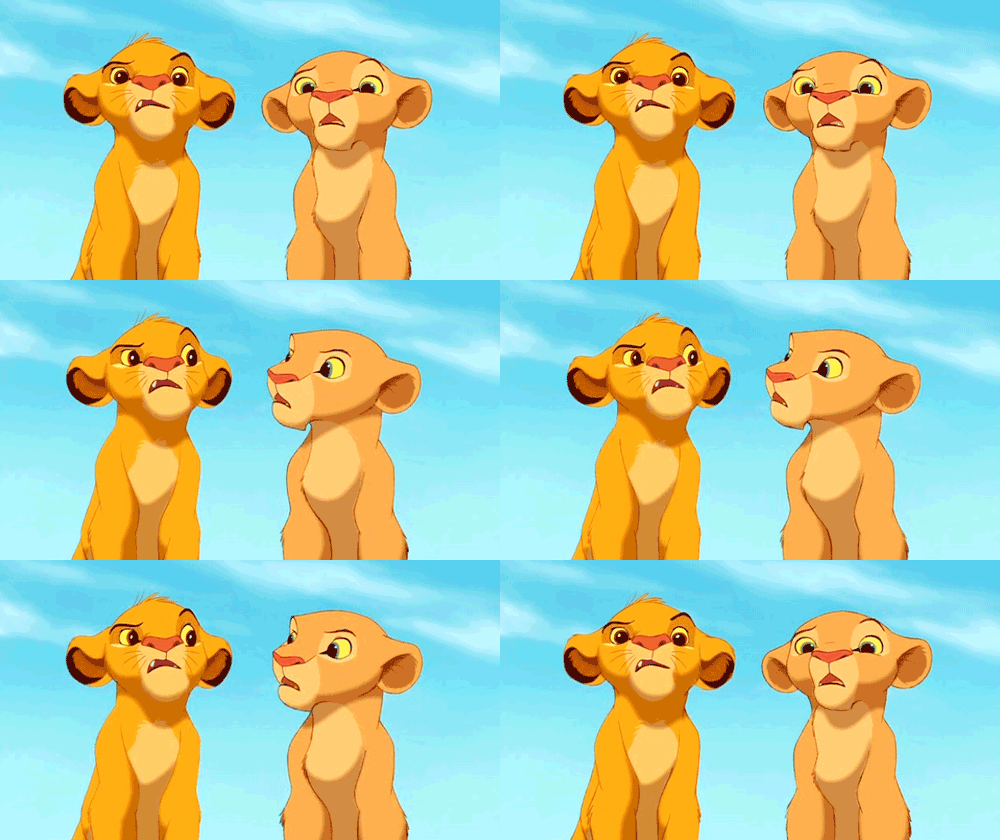
     

If a film of that aesthetic grandeur and deep meaning was made by a B-team, that is a team I would gladly be a part of. Like Sundiata King of Mali there was a valuable message to be taken from the film regarding both the value of family and how to rectify and process the past. 

From the beginning of the film, it is clear that family is of utmost importance. There is clear affection shown between Simba and his parents, and between the pride as a whole. What I feel distinguishes The Lion King from other Disney films that stress the value of family, such as the illustrious Frozen, is that chosen family is valued just as highly as biological family. Timon and Pumbaa came to Simba’s side when he most needed a companion, and they did not leave when times became tough. I think this is an important distinction, as many people do not have the “perfect” nuclear family that Disney promotes in corporate deals for its parks. By the end of the film, Timon and Pumbaa were just as valuable to Simba as were his mother and father. A chosen family is just as valid and fulfilling as a biological one. 

Furthermore, I think Disney does a good job dealing with the past, a formidable opponent in most of our lives. As Simran alluded to in her blog, there have certainly been times in all of our lives where we wanted, more than anything, to just run and hide from our problems. However, as illustrated by Rafiki, “the past can hurt, but the way i see it you can either run from it or learn from it”. Childhood and adolescence, in particular, are marked by a series of inevitable mistakes. The value of growing up and maturing, comes from learning from such mistakes. 
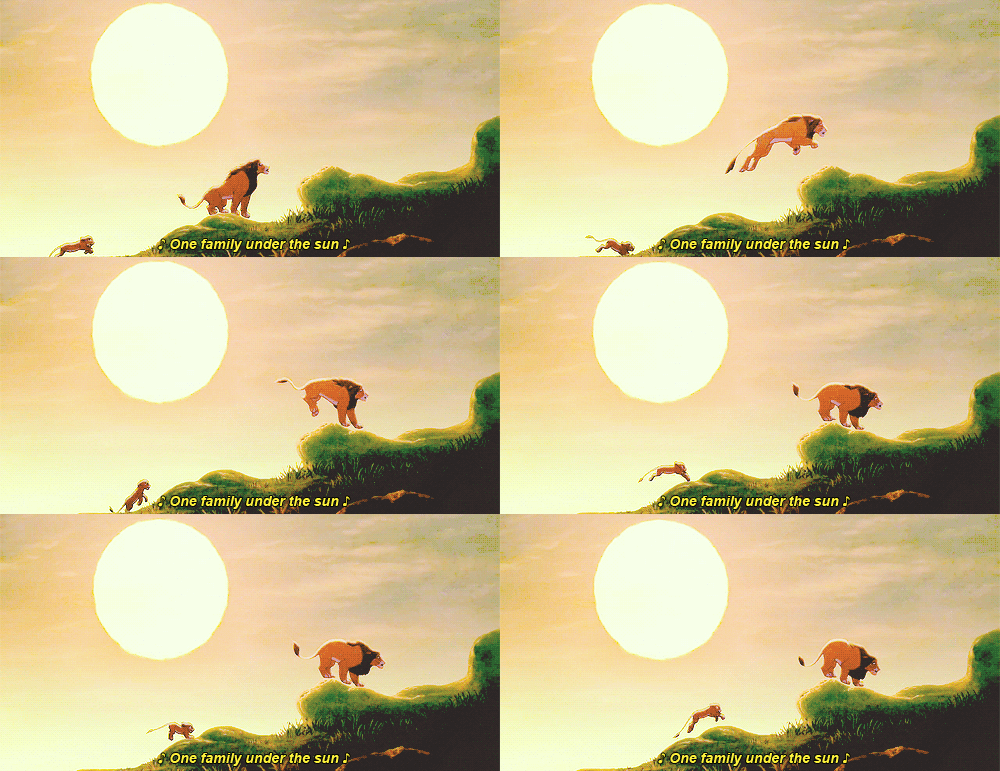
 

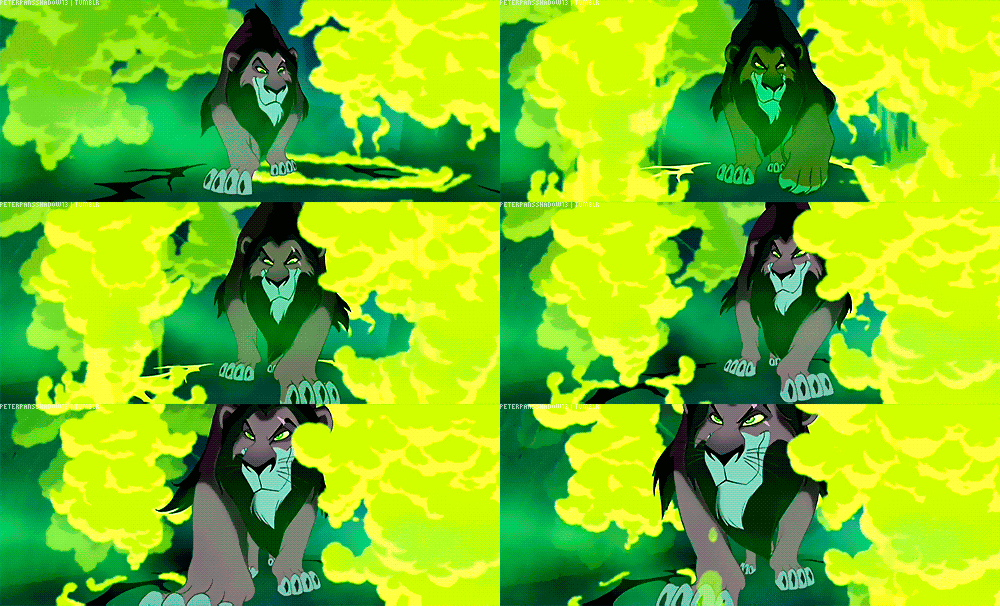
To be more film specific, I loved the comedic value that Timon and Pumbaa brought to the film, and I noticed some adult specific content, such as when Timon came this close to cursing that went over my head when I was younger. I was pleasantly surprised by the joy that the hyenas, intended villainous characters, brought me. I had to go to YouTube to watch the “Mufasa” scene more than once it made me laugh so hard. Speaking of villains, Scar, like Jafar, had that Snape-esque drawl that makes everything he says sound intimidating. This shot, marked by mysterious green smoke and menacing green eyes, is the quintessential Disney Villain scene…

In regards to criticism, I do not feel as though there is as much to unpack in this film as there is in its predecessors and successors. This is largely due to the fact that the protagonists are animals, instead of people, thus eliminating much of the room for error. However, potential criticisms could be the misuse of a British accent, American accents for presumably African lions, and the lack of African accents except for Rafiki. I look forward to further breaking this down in class. 


Sunday, March 24, 2019

Charlotte Hagerty Aladdin Film


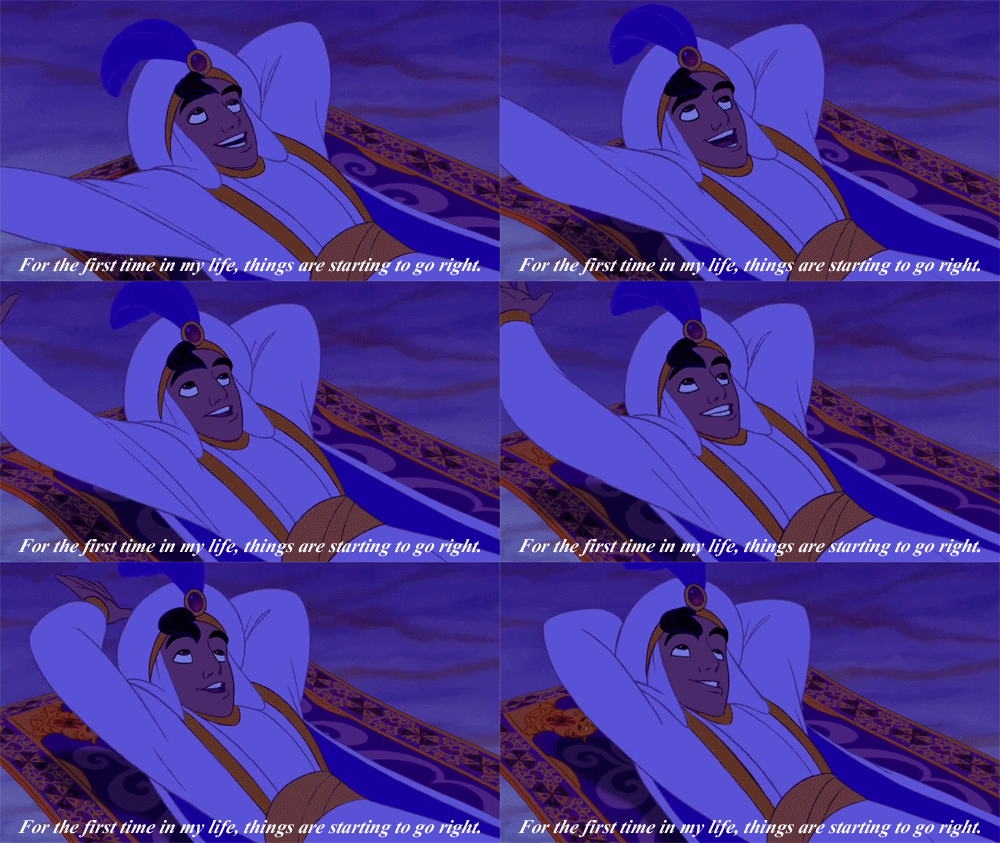
Whereas the original source material for Aladdin was dry and challenging to get through, the Disney movie was nothing short of a delight. It was my favorite film we have watched thus far and I found myself disappointed when it was over. I appreciated the direct address at the beginning, marked by ‘hitting’ the narrator with the camera. It seems reminiscent to me of a Shakespearean introduction. The Disney easter-eggs scattered throughout, such as Dumbo and Sebastian, were a pleasant surprise. Additionally, I loved all of the animal sidekicks. I was happy that I had forgotten most of the film, as it was a gift to watch it anew. Overall, I found myself watching the film like… 


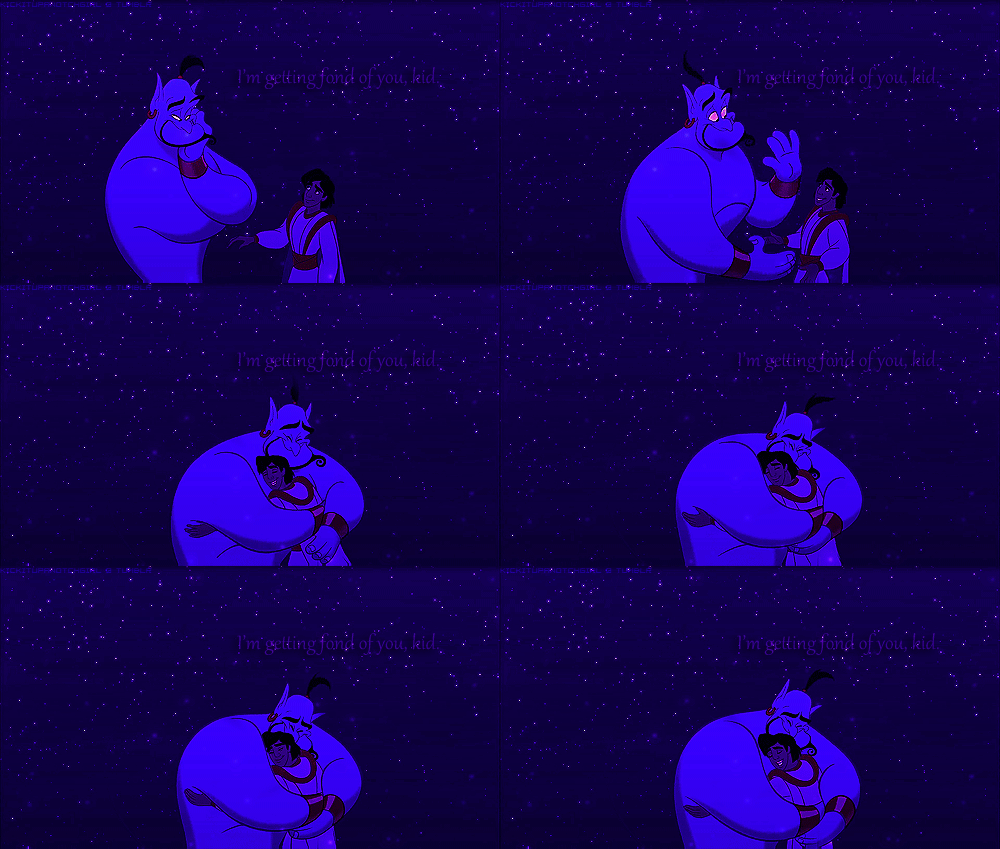
Like the film, the character of Aladdin also evolved for the better. Right from the beginning he proved that he was selfless, giving his only meal to homeless children that needed it more. Although he was certainly tested, he proved himself again when he used his last wish to set the Genie free. Although he was stealing, I found myself agreeing with his lyric, “Gotta eat to live, gotta steal to eat”. He was doing no harm to any of these vendors by stealing a loaf of bread or a piece of fruit. Thus, I found myself rooting for him and was happy when he found success and companionship. In the beginning, I found myself wishing I could just give him a hug, I feel like he could have used one. 


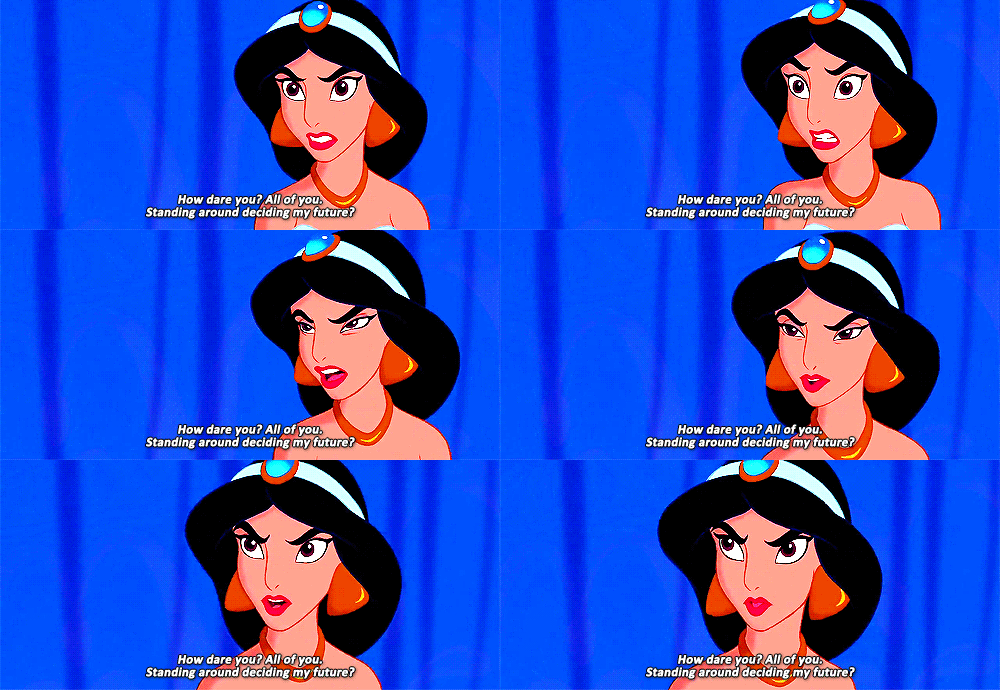
Jasmine also evolved as a character. Although her portrayal is still problematic, it is a vast improvement from her being a nameless, meek princess in the text. When she had her triumphant moment of...


I wanted to cheer her on! Often Frozen is regarded as the first feminist Disney film, however Jasmine and her side eye would beg to differ. She knew what she wanted and was not afraid to stand up for it. Her portrayal was still problematic, as it puts forth an unrealistic body image to young children. Additionally, she is wearing basically lingerie, which is most likely not historically accurate. However her character was very inspirational and teaches young girls to fight for what they want.

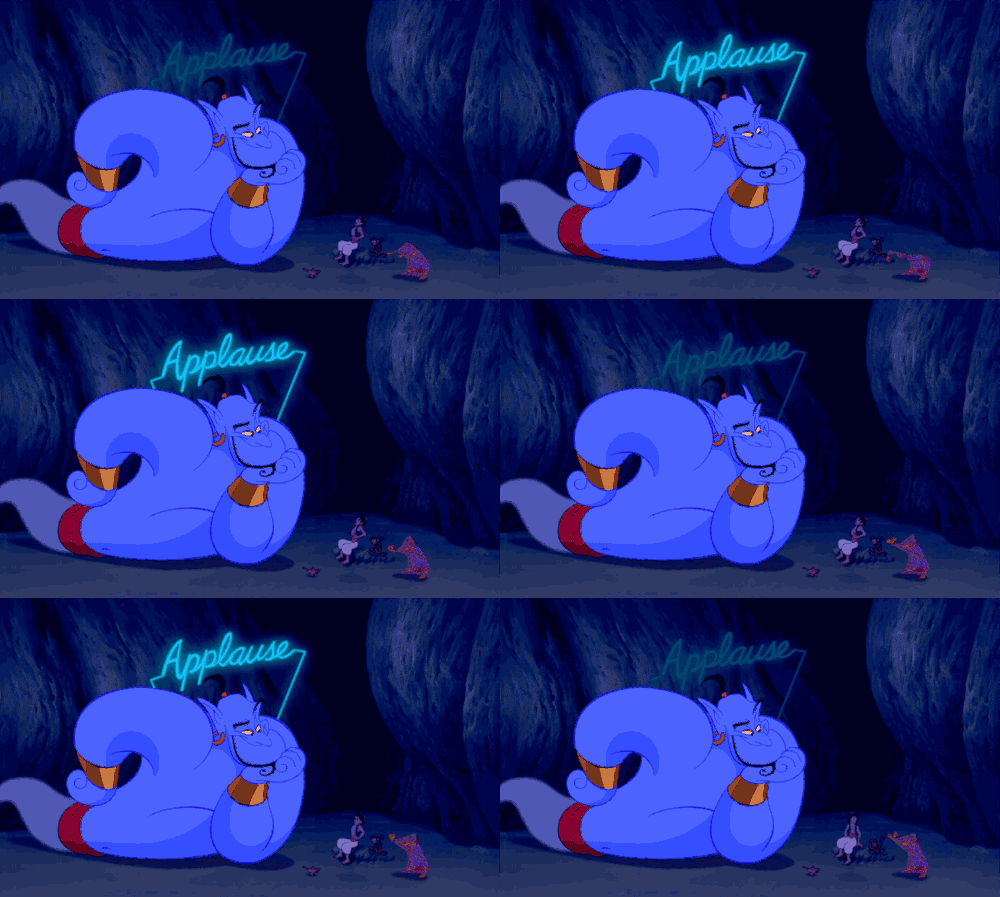
In dissecting the main characters of the film, I would be remiss to not discuss the Genie. I was blown away by the complexity of the animation and his character. He was simply pure joy. Robin Williams was an incredible talent and that shone through in this film. He was a much needed comic relief and the quickness and creativity of his transformation transfixed me. Also, I want one of these signs to follow me. I think it would do wonders for my self confidence.  

However, every rose is not without a thorn. The portrayal of Middle Eastern culture was problematic in the film: perhaps because it was Disney’s first film starring people of color, or perhaps because the directors simply did not care to be accurate. Many of the supporting characters felt like caricatures, with large noses and larger than life personalities. I am interested to see how Disney rectifies this in the 2019 version, as I know there has been controversy already surrounding the casting. In conclusion this film was a delight, and now I really want to go on a magic carpet ride. 

Tuesday, January 29, 2019

Charlotte Hagerty Disney's Snow White

Do you know you’ve finally grown up when the character you most connect with in Snow White is Grumpy? I often found myself relating to his sighs of annoyance and not-so-subtle grumbling. I disliked Disney’s Snow White for some of the same fundamental reasons that I disliked the book: the repeated stupidity of Snow White even after explicit warning, the enforcement of rigid gender roles, and the unnecessary length of the entire piece. However, as a viewer, I had a more favorable experience with the film than with the Grimm’s text. The visuals and audio were simply astounding for the 1930s and it made it clear to me how Walt Disney found his success. However, technological advances aside, I felt the bones of the story were improved by the development of the symbolism of the apple, the introduction of the mirror as a character, and the greater emphasis on the role of the dwarves.
I thought Disney’s development of the symbol of the apple with the addition of a wish fulfillment component, made me more understanding of why Snow White defied the dwarves’ warning to not trust any strangers. In the Grimm’s Snow White she takes the apple because it looked delicious. However, in Disney’s Snow White, not only is the apple visually appealing, but it also grants a wish to that person who eats it. Snow White is in a dire situation, so I do not blame her hope exceeding her ability to think logically. This wish fulfillment is the same reason that we as viewers buy into Disney movies, even though they may be outdated and problematic, at least some part of us hopes that these magical “Happily Ever Afters” will happen to us too.  
Another change that Disney made from the Grimms’ tale was turning the central symbol of the movie from the looking glass into a mirror. I cannot discern a difference between these two objects and I believe Disney most likely only changed the name as “mirror, mirror on the wall” has a better cadence. Semantics aside, looking glasses and mirrors serve the same function. Mirrors have been a longstanding symbol in literature and art, but generally, those who look into them are not looking for something “exact”, but for an idealized reality. The ancient Greeks told the story of Narcissus, a vain man who looked into a reflective pond and fell in love with himself, but he looked into his reflection to find gratification not reality. In Alice’s Adventures in Wonderland and Through the Looking Glass, the glass opened another world of mirror images where change of size and reversal of time occur– not reality. By nature, mirrors are an inverse of reality, where everything is flipped and delayed by an instant. However, in Snow White mirrors are used as the ultimate authority. The Evil Queen is willing, perhaps is even excited, to commit murder based on the information it giver her.  
Lastly, and this point is admittedly less analytical and more personal, but I loved the development of dwarves as characters. I did not remember how cute they were and how much they made me smile. Although there were certainly some aspects that were questionable —  such as the description and treatment of Dopey and the sexist quotes such as, “All females are full of wicked wiles”— they, on the whole made me smile throughout the whole movie. Additionally, by naming each dwarf Disney gave them each a distinct, loveable personality. And last, but not least, to Disney’s credit — both Hi-Ho and Someday My Prince Will Come really are amazing songs and I do not doubt they will be stuck in my head for days to come. Even as Grumpy was able to smile when he received a kiss on the head from Snow White, I too, received a glimmer of joy from Disney's Snow White.

Rose #Shelfie