Showing posts with label Morton. Show all posts

Sunday, April 14, 2019

Rooney Gooding-Williams & Morton

While I understood the bulk of Gooding-William’s argument and do believe he made valid and strong points, some of his ideas I do not agree with. I found his analysis of the “Euro-centric picture of Africa” interesting, as well as the point that the depiction of the circle of life as “endless” might “reduc[e] Africa to the endless reproduction of a natural and pre-historic course of life”, devoid of cultural, political, social, etc development. However, The Lion King is about animals and not people. Morton’s point that “Africa thus becomes the repository for timeless values, although that does not mean that the place itself is without history” articulates that the writers employed the circle of life to impact social values (that are undoubtedly western) but it never broaches actual African history (or the history of the specific region that the Lion King takes place in because Africa is not a country nor does it have one ~history~).
I also didn’t totally agree with his analysis of Scar- primarily that “the future he envisions would not entail the persistence of a form of life that ‘has always been’, but the creation of a utopia that has not yet existed. Scar fails, because his will to create utopia creates dystopia”. I would not say that Scar ever aimed to create a Utopia, rather his own ideal dystopia. I don’t think he fails at this except that he destroys the ecosystem, though his goal was never to preserve the circle of life. Morton argues that “it does not strike me that Scar and the hyenas represent a victory of history over the timeless ‘circle of life’”- Scar’s rise to power is not the one historical event given to ~Africa~. The Circle of Life is instead used as a metaphor for “law, order, and enlightened hierarchy”, and Scar merely disrupts it momentarily.
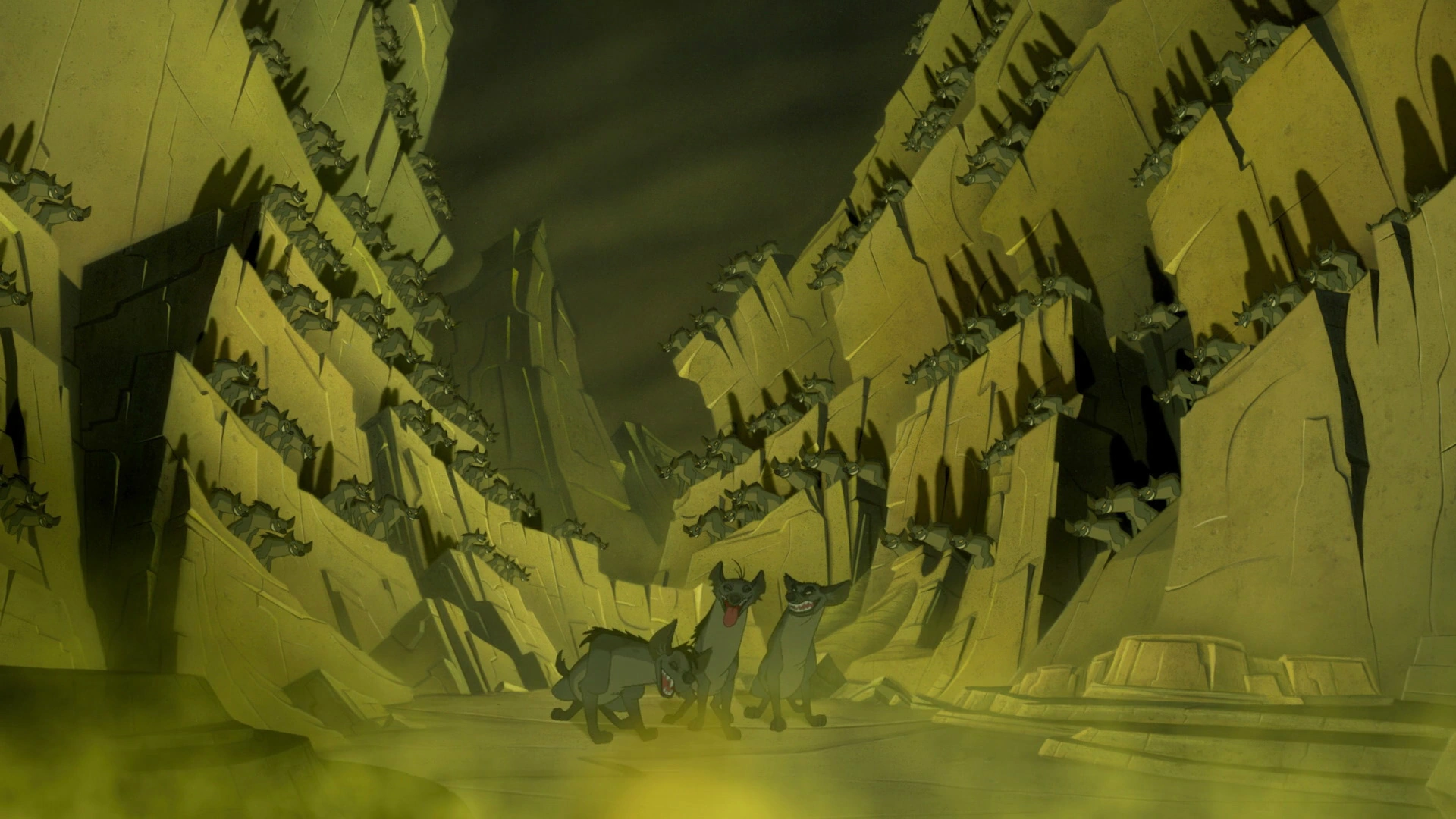
Finally, I don’t agree that the writers of The Lion King were going for a metaphor for American Inner City. While there are absolutely elements of this, primarily with the Elephant Graveyard representing the inner city/slums/projects/poor part of town, and that element was likely intentional whether consciously or unconsciously, as a whole, I don’t see it. The Elephant Graveyard and the accepts/portrayal of the hyenas is problematic or racist or classist. Yes. But rather than an intentional and explicit commentary, this likely was a product of the unchecked biases of the creators as they tried to portray evil.

Rylee Bowen, Gooding-Williams vs. Morton


Image result for africa gif

Image result for circle of life gifThe Lion King has brought on a tsunami of opinions on how Disney handled race and social identities. Robert Gooding-Williams, a professor of African studies and Philosophy at Columbia University, wrote "Disney in Africa and the Inner City: On Race and Space in the Lion King." This piece argues that the Africa Disney created is a metaphor for the U.S. "Simba and Nala are interpreted as lost in the inner-city of disenfranchised black and Latino residents (represented by the hyenas), & scar is read as empowering these denizens by giving them the political power they have lacked." (Gooding-William) His paper centers around the "invisible" social relations that push urban poverty onto unsuspecting Disney viewers. For the majority of the paper, Gooding-Williams battles the ideas of Hegel. Hegel called Africa "historyless" in which he meant Africans were unable to evolve spiritually. GW goes to explain that Disney's portrayal of Africa only solidifies Hegel's claim because the "Circle of Life" is so natural and idealized. It leaves no room for history. But do I agree with this? No! This view is a harsh view of Disney. The Circle of Life wasn't created to avoid a lack of spiritual growth, it was meant to accompany it.

Image result for good vs evil gif
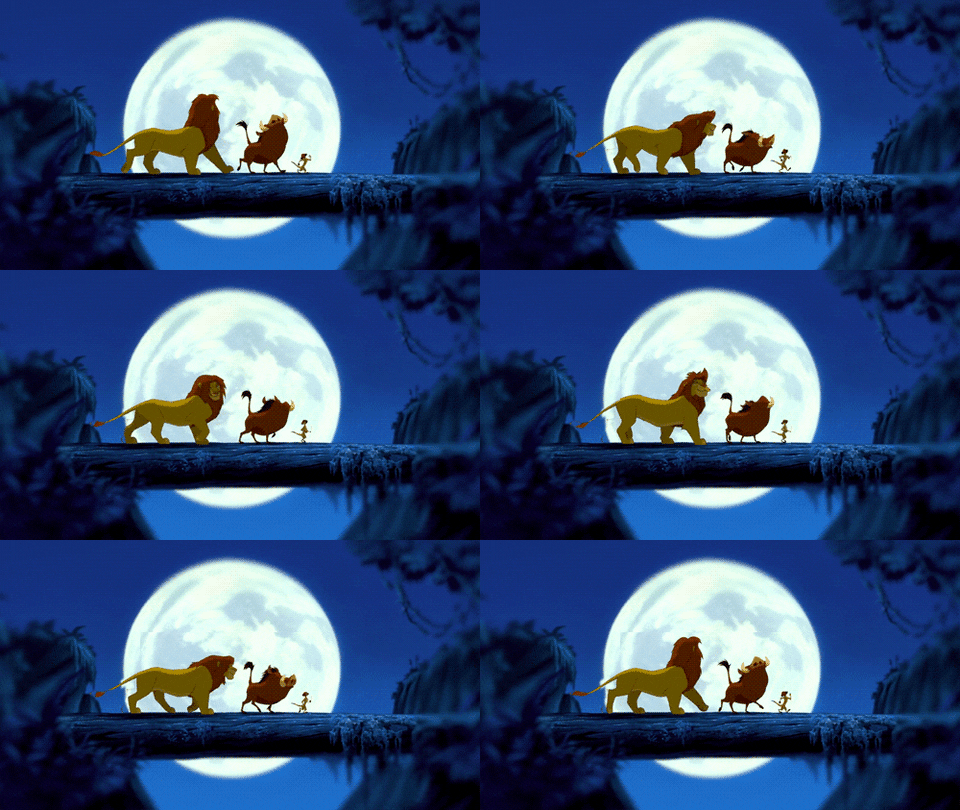
John Morton begins his debate, "Simba's Revolution: Revisting History and Class in The Lion King" by ROASTING Gooding-Williams' views. He calls then "revealing" and "problamatic" and explains that Disney's Africa is "the site of history and ongoing struggle." Morton also talks about the alliance formed between "the working class," Timon and Pumbaa, and "the ruling class," Simba. I liked this paper a lot more, but it felt unorganized. While it was written to debate the claims made by Gooding-Williams, it went off on its own quite a few times. Morton kept his paper professional and unbiased where Gooding-Williams' felt very in my face. I especially liked how Morton suggested the power struggle between Simba and scar just represented the classic clash of good and evil. I agree with Morton's claims more. Reading Gooding-Williams' piece felt like I wasn't recieving all of the information and was only seeing part of the picture.

Samuel Joseph Response: Gooding-Williams and Morton


Before I start, I just want to make clear that my argument may be slightly biased, and to take these words with a grain of salt. I had a lot of problems with Gooding-Williams’ understanding of The Lion King, and it was very difficult to extract my personal bias from my interpretation of his argument in comparison to that of Morton. While both arguments have flaws, my bias persuades me to join Morton’s side as the better argument overall, although at some points, I believe that Gooding-Williams has even more compelling arguments.



To begin with Gooding-Williams’ argument, I believe he himself presents an argument filled with preexisting internal bias. What started out as a political interpretation of the Lion King developed into an extremely racist and radical view of something that potentially no one would have seen before. All the ‘positive’ things that Gooding-Williams did to bolster his argument, due to my bias, made me count off for his argument. In the beginning, he addresses the naysayers, which is a ‘positive’ effort to start your argument. From TSIS, addressing the naysayers actually serves to bolster your argument and add ethos instead of bringing down your credibility (it also shows that you are not single-minded and open to other arguments). While he mentions opponents will argue that these films are made for entertainment, he refutes this by saying that thinking from this perspective casts out your ability to see the undertones in the film. While I do agree with this, the way that Gooding-Williams goes about arguing this makes me want to disagree with him. He presents his argument as the only way that is correct with extremely radical thought. So in fact, in my opinion, his addressing the naysayers actually lowers his argument. 

He does bring in outside sources and direct quotes in Hegel. While this should serve to add ethos to his piece, the outright racist and non-progressive nature of Hegel’s argument causes me to dislike the argument as a whole. The fact that Hegel claims that Africa has no historical part of the World is plain wrong; Hegel comes across extremely entitled here, and the fact that Gooding-Williams supports this makes him seem this way as well. I start to agree with Gooding-Williams’ argument when he mentions the facts about how Whoopi Goldberg and Cheech Marin are used to represent the hyenas as black and latino, and thus the hyena bunch as the ghetto. This argument completely makes sense to me, and I can’t refute it in any way. He then goes on to make the argument that Disney is showing that if we empower the black and latino citizens of America, that the country will go into chaos just as shown in the film, which I completely disagree with, and this shows his entitled mindset again. I didn’t enjoy the conclusion where he brought in new information with the Smith quote, which first of all I didn’t understand; second, I didn’t understand his explanation of the quote; and third, I didn’t see how it fit with his argument, which led me to believe that he confused himself and his readers at this point. Basically what I’m trying to get at here is that while Gooding-Williams has some amazing and revolutionary ideas, these are much too racist and radical to actually grant any credibility to. Therefore, I do not agree, nor will I want to agree with his argument.


Another argument that details the racism of the Lion King can be seen here, where it is mentioned that it is, in fact, Mufasa that is the racist character in the Lion King. Nick mentions that viewers do not know why Hyenas are exiled to the elephant graveyard, which is acceptable, and that we must question the background to these motives before diving into the movie itself. 


Morton, on the other hand, while refuting Gooding-Williams’ argument, does not include radical thought into his argument, rather a sound, logical arrangement of his thought. Before I even read his piece, I found myself on his side because any refuting of the Gooding-Williams’ piece would serve justice to the absolutely wretched thought process in the first piece. At first, the argument starts strong with a solid summary of the Gooding-Williams piece, and why it’s radical and wrong. Morton does a wonderful job of providing quotes and examples from the Gooding-Williams piece, and then goes on to explain why these thoughts are wrong, and provide new examples of thought for why his thoughts are correct. For this, I applaud Morton. However, as his argument progresses, I don’t necessarily see this as a full refutation of the Gooding-Williams piece, however, while the first half does so, the second half seems to be a completely new argument, which is not wrong in any way, but not what I was expecting. Another thing I noticed, is that in the second half, Morton got caught in a plot summary of The Lion King rather than providing us with solid and sound thought of his argument, which I was a little upset about. He, however, ends strong by again refuting Gooding-Williams’ argument as wrong and radical. While Gooding-Williams provides readers with an argument that at some points has merit, he includes overly racist and Marxist thought into his writing which causes the credibility of his argument to drop (in my opinion). Because Morton doesn’t do so, and his views align with my own hatred for the former piece, I am drawn to agree with his argument. Although there is too much of a plot summary in the second half of the piece, the first half does a wonderful job of refuting the Gooding-Williams argument. I would have hoped for more refutation of the former argument rather than a completely new argument in the Morton piece.

Andrew Shin: Gooding-Williams vs. Morton Response


After initially reading Gooding-Williams' argument, I could only think about how poorly argued  his argument was. His interpretation of Lion King was completely valid. I could definitely see the elephant graveyard as representative of the inner cities or otherwise marginalized groups of society. However, in the "Disney in Africa" section, I had absolutely no idea what was going on. Gooding-Williams chose to write a tribute to Hegel instead of finding anything to argue. The connection from the film to Hegel's Eurocentric viewpoint was extremely weak. In my opinion, he failed in proving his point that the Disney version of Africa is a "historyless" place. Perhaps if he had spent less time summarizing the entirety of Hegel's philosophy and just included a link like so, he might have had more time to actually add to his argument. In essence, this section was too much "they say" and not even close to enough "I say."

Personally, I would have taken the entire section entitled "Disney in Africa" out of the piece as it added absolutely nothing to Gooding-Williams' argument on the inner cities metaphor. Unfortunately, the "Disney in the Inner City" section was also extremely poorly argued. As pointed out in the Morton piece, Gooding-Williams' entire argument rests solely on the fact that two out of the three hyenas in the film were Latino and African American, a detail that was almost certainly coincidental in the actual casting, yet is being exploited here as the main evidence for an argument. Gooding-Williams also does not spend a lot of time explaining the significance behind the hyenas even though it is key to his contention. He also falls in the fact that he categorizes the hyenas as "black and Latino denizens" exclusively instead of a more generalized interpretation of marginalized groups.

Related image

The Morton piece was better in my opinion. It did not criticize the argumentation of the Gooding-Williams piece as much as I had liked. Furthermore, it provided a new interpretation more so than editing the one in question and also spent a little too much time summarizing the film. However, Morton's more political interpretation of the film was completely valid. He is correct in that there is not "black and white" in this film. Instead, it is a showcase of various political systems that highlight corruption and other issues within each defined class. Simba is most definitely influenced by both Scar and Mufasa, and his monarchy is very different from either of his predecessors'. There is chaos within each class of society, and this is what Lion King communicates instead of a strict dichotomy between rich and poor.

Saturday, April 13, 2019

Gooding-Williams vs. Morton


When it comes to the clashing arguments of Robert Gooding-Williams and John Morton about Disney’s The Lion King, there’s a clear winner. Gooding-Williams offers an oppositional reading of the movie that constructs a complicated political allegory in which the Pride Land is white, wealthy America and the elephant graveyard and its hyena inhabitants represent the inner city. His evidence coincidental at best, Gooding-Williams fails to convince me that “Disney’s film lets disappear from view the macropolitical and macroeconomic social relations which cut across the boundaries of urban spaces yet contribute substantially to the ongoing reproduction of urban poverty” (378). Responding directly to Gooding-Williams, Morton successfully highlights flaws in Gooding-Williams thinking and proves it to be no more than wishful thinking. 

Like many stories, The Lion King has a plot that relies on obviously marked outcasts to drive the conflict. Gooding-Williams claims that the hyenas, who are the outcasts in this instance, are emblematic of people living in America’s inner cities because of way in which Disney marks them as different. The two hyenas with lines in the movie are voiced by Whoopi Goldberg and Cheech Marin, and Gooding-Williams argues that their voices are used “to represent the speech of...hyena characters as black English and Latino slang” (377). He goes on to compare the hyenas’ living quarters to overcrowded housing developments common in inner cities. The way in which the hyenas are vilified by and isolated from the rest of the animals of the Pride Land, he argues, mirrors wealthy and middle class America’s attitude toward its inner cities. 

Image result for hyenas lion king be prepared


Morton, arguing that Gooding-Williams’ Marxist bias guides and misinforms his theory, responds to Gooding-Williams by focusing on The Lion King’s central conflict between good versus bad and how the inner city allegory doesn’t quite fit. Morton points out that the constant “series of oppositions between good and evil, between light and dark...and between legitimate work and theft” shape the story (314). It requires an obvious villain that fits the dark and evil side of these oppositions, and the hyenas are simply the ones chosen to do so. Morton continues, arguing that Simba’s friendship with Timon and Pumbaa contradicts Gooding-Williams reading of the movie. Like the hyenas, they fall at the bottom of the food chain and are social outcasts. Morton suggests that “through the ‘brotherhood’ struck up by Simba, Timon and Pumbaa, The Lion King strikes an alliance between the productive working class and the legitimate ruling class” (315). This friendship counters the idea that Disney seeks to vilify the lower classes and encourage their isolation. 
Related image


The Lion King definitely has some problems regarding race, but at the end of the day, Gooding-Williams is too far-fetched in calling it a political allegory for American inner cities. 

Rose #Shelfie