Sunday, March 24, 2019

Katherine Tang, Disney's Aladdin Response


Disney works its magic again, turning the lazy and happy-go-lucky Aladdin in "Aladdin and the Wonderful Lamp" into a “street rat” with heart and dreams. This becomes immediately apparent when he sees the kids on the street and offers them bread and defends them from the abuse of the neighboring prince. The audience has no choice but to emphasize with him as he vies for Princess Jasmine’s heart. 
Image result for aladdin movie stills
Link: URL
Mary Ness has written that the original Aladdin was about “sly rebellion, of the powerless taking control," and Disney’s version has hints of this in how Aladdin eventually climbed from his state of poverty to a prince who would eventually overtake the Sultan’s role. However, Disney’s film centers more on the idea of attaining freedom as opposed to being trapped. This includes:
  • Jasmine locked inside the castle, unable to experience the outside world and find her true love,
  • Aladdin trapped in his way of life due to his social status,
  • and the Genie stuck in the lamp serving a master when he wants to be free of having to obey.
By the end of the film, these conditions have all changed, and each character succeeds somehow in freeing themselves. This is the heartwarming aspect of the film, though, contrasting with the more problematic and misogynistic subtleties. 

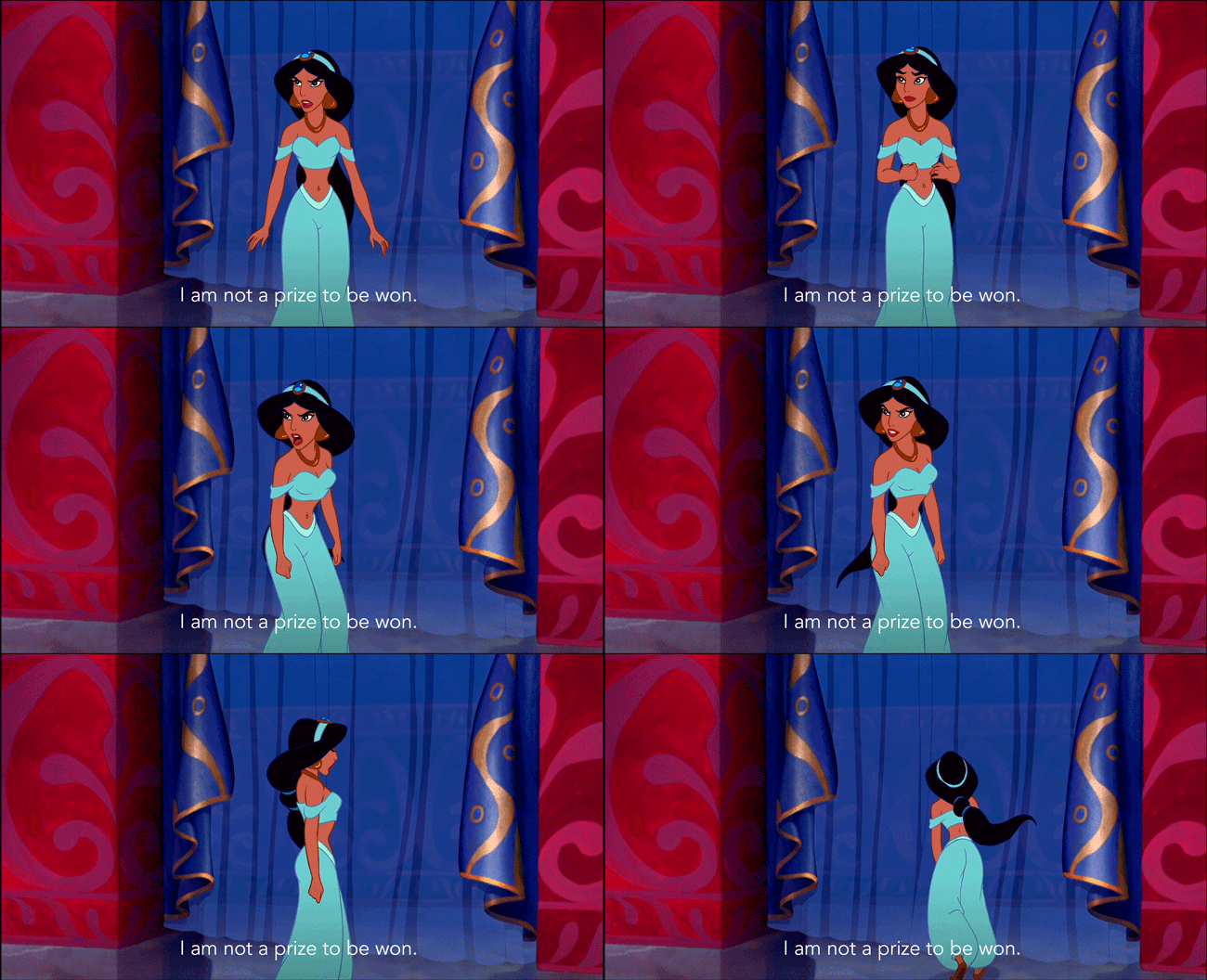
The non-factor that the unnamed princess was in the original version sadly carried over into the Disney version, continuing the more traditional view of gender roles rather than offering anything particularly progressive. The females in the film were grossly over-sexualized in their appearance and mannerism both in their limited upper body clothing and their dancing, perpetuating an insulting stereotype for Arabic women. As Ella Shohat puts it in “Gender in Hollywood’s Orient”, “darker women, marginalized within the narrative, appear largely as sexually hungry subalterns,” visible in this film. 
Link: URL
Jasmine was once again treated as a sexual “object” to be desired. Aladdin, as in the original, falls in love with her immediately on the streets after her seeing her face as Disney promotes unrealistic standards of beauty in creating an Arabic princess flawless and of generic Westernized standards of beauty (including thin frame, long thick hair, and big eyes). The film demonstrates its misogynistic agenda with the treatment of Jasmine throughout — she was sexually abused by Jafar after he became Sultan and he even had the audacity to call her “pussycat.” This implied that the role of women was to be subservient to men, an upsetting portrayal in what is supposedly a family film, friendly to young children. During this final conflict, Jafar even locks Jasmine up inside an hourglass, and, suddenly, Aladdin turns into a hero who must save Jasmine from death as she becomes becomes useless (and arguably a hindrance) for Aladdin while he is trying to get rid of Jafar. 

The film also portrayed Arabic culture and the Middle East in questionable ways. Beyond the way the women were shown as seductresses, The film doesn’t do Arabian culture any justice, notable in how the main characters, particularly Aladdin and Jasmine, were portrayed with more Westernized features, mentally signaling “good”, compared to the more insulting and stereotyped portrayal of the others, including the evil characters. This was notable in the contrasting physical appearances, attire, and accents.

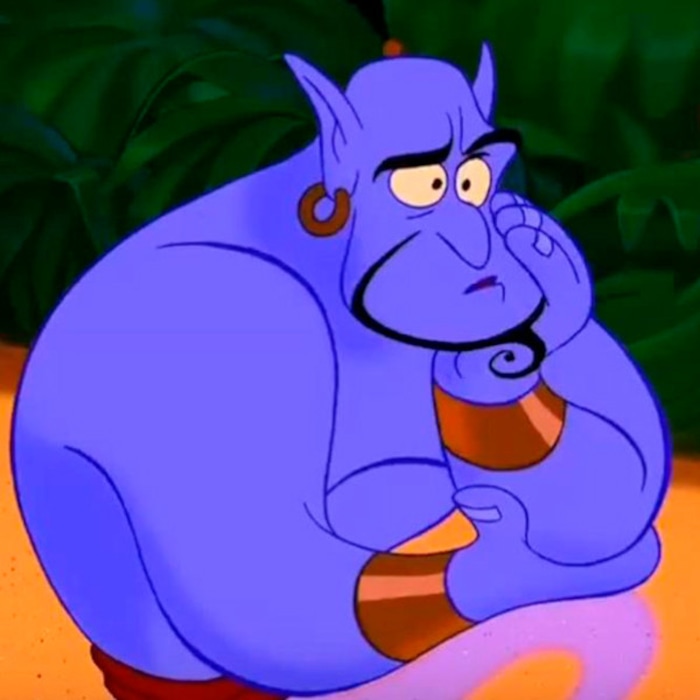
Disneyfication is written all over the story, as Disney took out all the killing inside the original, even brilliantly eliminating Jafar without actually killing him off. Robin Williams was absolutely brilliant as the Genie, and I found his light-hearted character and humor the highlight of the film. Overall, I definitely enjoyed the Disney film more than the original although it definitely perpetuated stereotypes of Arabian culture and the Middle East (at least it was better than the completely geographically inaccurate original?). I’m interested to see how the story will be further altered in the live-action remake!
Image result for aladdin hat meme
URL

Saturday, March 23, 2019

Elizabeth Reneau Disney Aladdin Response


Well, the moral of the story is I want to be taken on a magic carpet ride… Disney brought a new magic to this once grim story of Aladdin. This film is basically an animated rom com with some Disneyification and cultural assumptions. I loved the audience interaction with the film through the musical compositions. I am always a sucker for the classic boy meets girl love story which Disney loves to capitalize on. However, while Disney added its magic and pixie dust to a once non-dynamic story, they missed on the cultural misrepresentations and generalization of different people groups along the way. Everyone likes to hear the good news before the bad, so let’s start with the things Disney got right.
I thought Disney excelled in showing the different facets to Jasmine and her character. I think it is so important Disney added Jasmine to the franchise because she represents a different culture beyond the ridiculous obsession with the white ideal. I love how she empowered herself to be bold and live in the freedom everyone deserves. I think for all the little girls out there (and even me at 19) who watch Jasmine and see how she “sets the bar high” for herself in regards to the man she wants to love is so valuable. It is valuable because society today throws around marriage and love like it is nothing, and Jasmine makes it something important to her. I also loved the animation Disney displayed throughout the film. I laughed several times when the genie switched to different characters or showed different personalities. I thought it brought humor to the darker parts of the film, making it more childlike.

Now, to the things Disney got wrong. Let’s begin with the setting of this version of Aladdin and the different cultural issues Disney displayed about this region. So, in the original version, Aladdin was in a Chinese area. In the movie however, we are taken to a middle eastern area. The markets and streets emphasize forms of trading in middle eastern countries, but the issue was the assumption that women of this culture are seductive, there are many “street-rats” in this area of the world, and there are many robbers/sketchy people.

Next, and in my opinion the biggest issue of the film, was the treatment of women. Jasmine was treated as a piece of property ready to be sold off to the next best buyer. Her father attempted to shield her from this, but the law at this time in history agreed that women did not earn the right to decide who they could love. Disney takes on misogyny to the fullest effect and does not shield its audience from issues of women inequality. Jafar wanted to marry Jasmine for his own personal gain—not love. He would use her as a piece in his power-hungry puzzle of life. Aladdin also used Jasmine’s status as a princess to make his past life as a homeless “street-rat” seem non-existent. 

However, even with the things Disney did wrong, they got a ton right. Aladdin is one of my favorite Disney films because it allows you to dream. It allows you to think of love. And it challenges you to stand up for what you believe in. 

Andrew Shin: Aladdin Film Response

Scene-by-scene Commentary:

The scene with the first suitor on the horse establishes that one's worth in this world is directly correlated with how many material things one has.

Jasmin's father says that he wants Jasmin to be taken care of and provided for after he is gone. A loving declaration on the surface but also an insult to her independence and individuality.

It seems that there is a correlation between the accent of a character and whether he or she is good or evil. Antagonists tend to have a thicker "Arab" accent while the protagonists speak perfect English. The linked article talks about this topic a little more, not limiting itself to Aladdin in particular.

At least in the movie, the first time Aladdin sees Jasmin is not peeping in on Jasmin while she is taking a bath.

It is interesting that each character has an animal associated with them. Furthermore, the only one that talks is associated with the villain.

The relationship between Aladdin and Jasmin moves unusually quickly, but it has become much more progressive or realistic than Snow White.

The talks of violence including beheading, dismemberment, and murder are so light and neglected. It is easy to see how a young child might be desensitized or even grow comfortable with these practices after being introduced to them in this way.

The "golden rule" is especially realistic and consistent with the source material. In fact, the entire movie centers around the fact that the one with the gold makes the rules.

Aladdin in the cave of wonders vaguely reminds me of the mythical tales of Orpheus as well as Persephone. In both cases, the cave of wonders is like the underworld, and touching anything or looking back at anything can doom you. The cave is scene is successful in communicating themes of greed and temptation.

The rule that the genie cannot kill anybody is amusing, considering that this would be pretty little to ask in the original source text.

I never noticed this when I was younger, but Jasmin's father is quite the permissive parent and also a terrible sultan. There are so many problems that would be solved if he was just more competent.

The genie shifting into a flight attendant after allowing Aladdin to escape says a lot about the stage that feminism was in during the time. The stereotypical portrayal of the job could be seen as both offensive and non-progressive.

Aladdin's entourage after becoming a prince is not very different with the description in the source material. He is surrounded by women and traveling behind an army of slaves. His parade also highlights his material things, which serve as proof that he is worth something. I am happy to see that Jasmin is not impressed at all with this display.

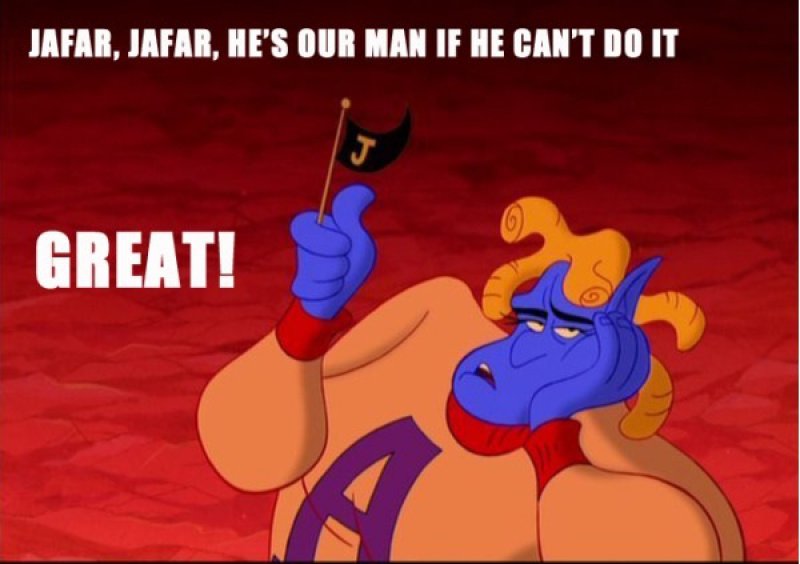
I did not remember this scene, but I found it extremely amusing that Disney chose to make their own adaptation of the princess helping Aladdin to "kill the African magician." Although instead of dying, Jafar simply becomes a genie. This also included my favorite scene:

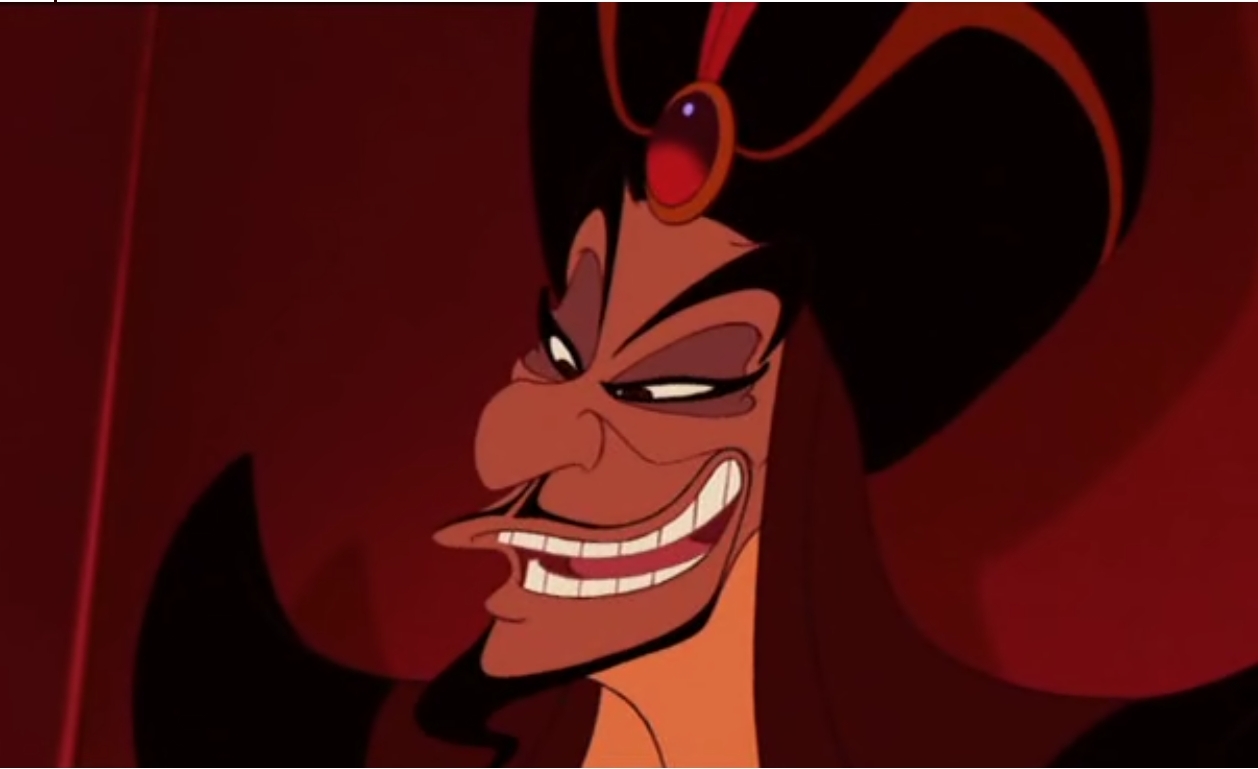
Image result for aladdin jafar meme

Wait, if the sultan could just do away with the any law he doesn't like, why didn't he do it earlier?

Andrew Shin: Shelfie

Chris Theodore, #Shelfie

#Shelfie 🙉

Chris Theodore Disney Aladdin Response


Well Disney... you did some good... you did some bad. Would you like the good news first? I think so.

You did a much better job with the princess Jasmine. Aside from some scandalous clothing choices here and there, Jasmine represented to me a much better progressive picture of what it meant to be a Disney princess. Goodbye to letting a man tell you who to marry, Jasmine wanted to find the person that she truly did love. Not only that, she would risk her position and status just to be herself. Not only did she challenge positions of love, she is also pretty smart. I can't give her full credit because she couldn't fully get at Aladdin's disguise, but she did some great things. To name a few: She pretended to be dumb in the marketplace (oh... that will come back for part of the bad), didn't let Aladdin just waltz back into her life, and in the end, again, pretended to go along with being in love with Jafar (haha imagine kissing him like that... big oofs). Although in the end they still ended up in a true love Disney relationship, I think I am semi-okay with this one.

Another thing was creating an evil villain that, for myself, hated right from the start. I don't know if this intentional by Disney, but I feel like their villains have a commonality of face structure (at least in regards to the films we have looked at in this class). Anyways, back to Jafar. This man carries a wicked serpent staff.


Not only does he carry it... he turns into a snake, places people under the spell of the snake, and is a snake when it comes to attempting to deceive the other characters. This just helps accentuate the "evilness" about him. By the end, you are so glad he is gone... at least I was. I also do have to mention my sister was Jafar for one of her dance recitals in high school, so bonus points there I guess...
Okay... now the not so good...


You know I was really started to like the genie. However, once he started changing into many different characters there was, in my observation, a lot of stereotypes being shown. This representation of different cultures started to get dicey for me, as it is an American film trying to represent others that are not American. I could go on about the genie making strippers for Aladdin, but I will save that for another time.

Continuing off of stereotypes... the Middle East ring a bell anyone? Aladdin knocks this one to the ground so much that it was almost painful. We hear prays to Allah, depictions of the barbarians, the building structure, see the colorization of the people, and just illustrations of what is believed to be Middle Eastern Arabian life. Disney creates the sense that "that the Middle Eastern world is a senseless one where you are executed or mutilated for the slightest infraction. And most importantly, nobody wants it to be that way." The movie is entirely different if you change the location, obviously, but I believe it could've been avoided to misrepresent the people of the Middle East so wrongly.

So overall, some good, a decent amount of end. Just feel for my man Abu and his constant third-wheeling. 

Elizabeth Reneau, #Shelfie

This is my #shelfie from the stacks!! 


Friday, March 22, 2019

Katherine Tang, #Shelfie


Avery, Aladdin (Disney)


Image result for aladdin genie gifLike Snow White & the Seven Dwarves, I like Disney’s Aladdin better than the original story. While the movie embraces some seriously racist stereotypes of Middle Eastern peoples and subscribes to the idea of a monolithic Middle East like “Aladdin and the Wonderful Lamp,” Aladdin offers its audiences a more concise plot, hilarious animal sidekicks, good music (zero points for Snow White there), and a smart and confident princess. In both versions, there’s the influence of Orientalism and a plot that relies on misogynic values, we might as well pick the one where Robin Williams voices the genie.
Image result for jasmine aladdin gif
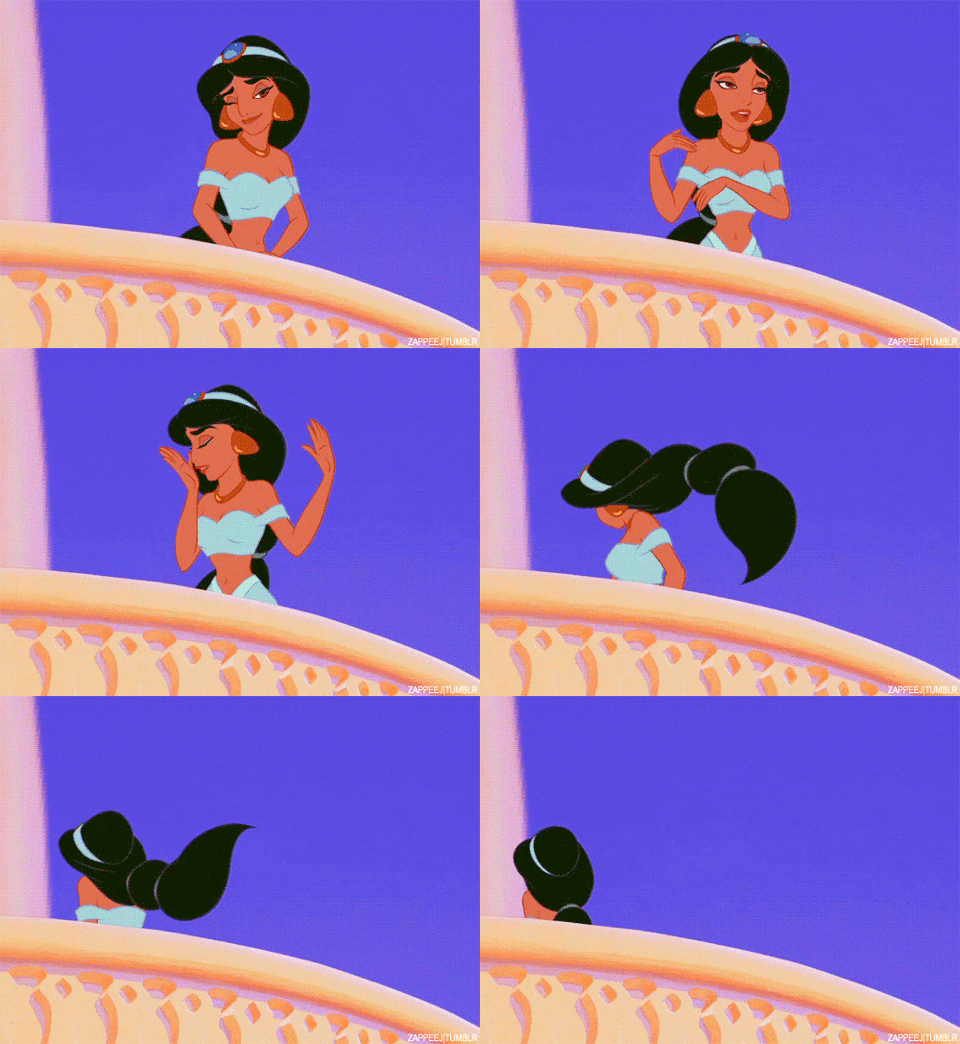
Related imageBefore I get into my critiques of Aladdin, here’s what I think Disney did right. Prior to re-watching the movie, I always lumped Jasmine and her anachronistic wardrobe choices in with princesses like Aurora, Snow White, and Cinderella – passive with marriage as their only purpose in life. While Jasmine’s primary conflict in the movie does indeed deal with marriage, it’s about marrying for true love rather than because it’s the law. Until she meets and falls in love with Aladdin, she’s willing to throw away her luxurious life and palace to avoid marrying a man she doesn’t love. She isn’t afraid to stand up to Jafar, the Sultan, and Aladdin when they squabble about who she’ll marry – she calls out their sexism and forces Aladdin at least to change the way he speaks to her. Although naïve at times, Jasmine is unabashedly honest and extremely quick – she followed along with Aladdin in the marketplace, figured him out, and distracted Jafar at the very end (she really took one for the team with that kiss). I’d say she is Disney’s first badass princess. 

Related imageNow, as great as Jasmine’s character is, she cannot make up for the structural misogyny that drives the plot. Like the tale of Snow White, the piece of the original story Disney preserved most was the sexism. While annoying laws and customs demanding Jasmine marry may have been the norm in whatever time period Disney was going for, the fact that those are historical accuracies they always manage to keep in their movies bugs me. If they’re going to throw everything else out the window, why not leave the sexism out too? At times it may feel like Jasmine’s character serves as a vehicle to criticize such customs and institutions but then you remember that it’s Disney, and in order for Aladdin to succeed in his rags-to-riches story, he needs a princess who must marry because the law and her father say so. Also, was Jafar calling Jasmine “pussycat” in a sexual way at all necessary? No? I didn’t think so.  
Related image
Image result for aladdin crooked nosesAlong with some problematic misogyny, Disney also demonstrates its inability to portray non-Western cultures accurately for the first time with Aladdin. It shows that research of the Middle East for the movie was only attending a expo on Saudi Arabia (held in Los Angeles). What stood out to me immediately was that every single man in the movie with the exception of Aladdin had big curved noises – something often included in caricatures of Arabs. Also, as I previously referenced, Jasmine’s outfit wouldn’t slide for a princess (or most girls for that matter) in that region of the world, not even today. In reality, she would’ve been wearing long sleeves, something covered her midriff, and a veil of some kind. If Disney wanted to forgo the veil because of their racist and misguided perception that women who wear veils are less free than their  counterparts, fine. But, at least give her a top that covers more than a bra, if anything for her sake so she isn’t fetishized.


Real quick, some major plot wholes that I notice every time I watch this movie. Why can Aladdin and Abu touch the magic carpet in the Cave of Wonders? If Aladdin wants to be both a prince again and free the genie, wish to be a prince again and give the lamp to Jasmine for her to wish him free. Also, if the Sultan could have changed the law all along so she could marry for love, why put Jasmine through all that? 

Rose #Shelfie